Cementitious Fireproofing in Saudi Arabia
Reliable Passive Fire Protection for Steel Structures and Industrial Projects
Introduction
Fire safety is a fundamental requirement in modern construction projects across Saudi Arabia. As the Kingdom continues its rapid industrial and infrastructure expansion under Vision 2030, ensuring structural fire resistance has become mandatory for factories, warehouses, commercial buildings, and large-scale developments.
Among the most widely used passive fire protection systems is cementitious fireproofing. This cost-effective and durable solution provides critical fire resistance to steel structures, helping maintain structural integrity during fire exposure. In Saudi Arabia’s industrial sector, cementitious fireproofing is commonly specified to achieve fire ratings ranging from 1 hour to 4 hours, depending on project requirements.
Cementitious fireproofing systems are especially suitable for industrial environments due to their performance, affordability, and ease of application. They play a vital role in protecting steel structures from high temperatures and preventing premature collapse.
What is Cementitious Fireproofing?
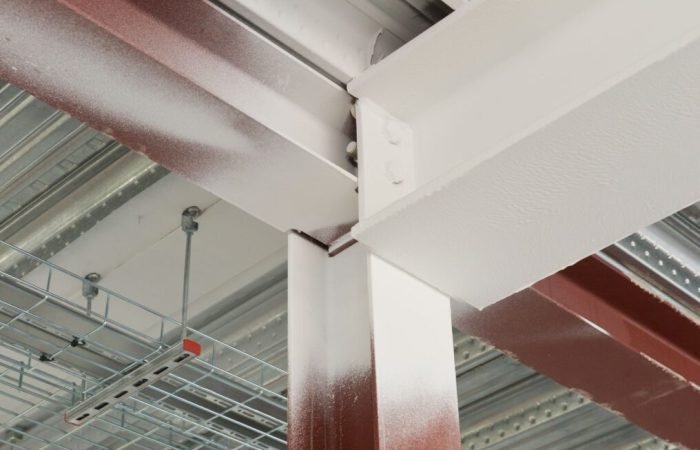
Cementitious fireproofing is a spray-applied fire-resistant material composed of cement-based or gypsum-based compounds mixed with lightweight aggregates and fire-retardant additives. It is applied directly to structural steel members such as beams, columns, and decks.
When exposed to fire, the material acts as a thermal barrier, insulating the steel from rapid temperature rise. By slowing heat transfer, cementitious fireproofing maintains the steel’s load-bearing capacity for a specified duration.
This system is classified as a passive fire protection solution, meaning it does not require activation or mechanical operation. It works automatically during fire exposure.
Why Cementitious Fireproofing is Essential in Saudi Arabia
Steel is a preferred construction material due to its strength and flexibility. However, it loses approximately 50% of its strength at around 550°C. In a fire scenario, such temperatures can be reached within minutes.
In Saudi Arabia, industrial facilities often include:
-
Large open-span steel warehouses
-
Manufacturing plants
-
Oil and gas support buildings
-
Power and utility facilities
-
Logistics and distribution centers
These facilities require reliable fire protection systems that comply with Saudi Building Code (SBC) and Civil Defense regulations.
Cementitious fireproofing provides:
-
Structural stability during fire
-
Life safety protection
-
Compliance with regulatory standards
-
Cost-effective fire rating solutions
-
Long-term durability in industrial environments
Types of Cementitious Fireproofing Materials
Cementitious fireproofing products are generally classified into two main types:
1. Gypsum-Based Fireproofing
-
Lightweight material
-
Suitable for interior applications
-
Economical solution
-
Common in commercial buildings
2. Portland Cement-Based Fireproofing
-
Higher durability
-
Better resistance to moisture and impact
-
Suitable for industrial environments
-
Preferred for factories and warehouses in Saudi Arabia
Portland cement-based systems are widely used in the Kingdom due to their ability to withstand harsh climate conditions.
Applications of Cementitious Fireproofing in Saudi Arabia
Cementitious fireproofing is commonly applied in:
-
Industrial factories
-
Steel warehouses
-
Commercial buildings
-
Shopping malls
-
Power plants
-
Oil & gas facilities
-
Industrial cities projects (MODON developments)
-
Parking structures
Its versatility makes it suitable for both new construction and retrofit projects.
Fire Ratings and Thickness Requirements
Fire ratings are determined by the required duration of protection:
-
1-hour fire rating
-
2-hour fire rating
-
3-hour fire rating
-
4-hour fire rating
The thickness of cementitious fireproofing depends on:
-
Required fire rating
-
Steel section size
-
Hp/A ratio (heated perimeter to cross-sectional area)
-
Approved design specifications
Professional contractors measure dry film thickness using calibrated gauges to ensure compliance.
Installation Process
The correct application of cementitious fireproofing is essential to achieve certified performance.
1. Surface Preparation
Steel must be clean and primed with approved coatings. Any rust, oil, or contamination must be removed to ensure proper adhesion.
2. Mixing
The material is mixed with water using specialized equipment to achieve the required consistency.
3. Spray Application
The material is sprayed onto steel members using high-pressure spray machines. Application may be done in multiple passes to achieve required thickness.
4. Thickness Verification
Wet and dry thickness measurements are conducted to ensure compliance with design requirements.
5. Curing
Proper curing is required to achieve full strength and fire resistance.
Advantages of Cementitious Fireproofing
Cementitious systems offer several advantages:
-
Cost-effective compared to intumescent coatings
-
Suitable for large industrial projects
-
High fire resistance ratings
-
Easy application
-
Non-combustible material
-
Durable under industrial conditions
-
Minimal maintenance requirements
These benefits make it the preferred solution for warehouses and factories across Saudi Arabia.
Compliance with Saudi Standards
Cementitious fireproofing in Saudi Arabia must comply with:
-
Saudi Building Code (SBC)
-
Civil Defense requirements
-
ASTM fire testing standards
-
UL or equivalent certifications
-
Approved project specifications
Proper documentation and inspection reports are required for final approval.
Climate Considerations in Saudi Arabia
Saudi Arabia’s climate presents unique challenges, including:
-
High temperatures
-
Dust exposure
-
Humidity in coastal areas
-
Large temperature fluctuations
Cement-based fireproofing systems are particularly suitable for these conditions due to their durability and resistance to environmental factors.
Cementitious vs Intumescent Fireproofing
While intumescent coatings provide thin and aesthetic finishes, cementitious fireproofing is generally preferred for industrial projects due to:
-
Lower cost
-
Faster application for large areas
-
Higher impact resistance
-
Better suitability for concealed steel
The choice depends on project requirements, budget, and aesthetic considerations.
Quality Control and Inspection
Quality assurance is critical for fireproofing works. Contractors implement:
-
Material approval submittals
-
Mock-up samples
-
Thickness testing
-
Adhesion testing
-
Inspection documentation
These procedures ensure performance and regulatory compliance.
Cost Factors in Saudi Arabia
The cost of cementitious fireproofing depends on:
-
Required fire rating
-
Thickness
-
Total steel surface area
-
Accessibility
-
Project size
-
Material brand and certification
Generally, cementitious fireproofing is more economical for large industrial projects.
Sustainability and Long-Term Performance
Modern cementitious fireproofing materials are designed for long service life with minimal maintenance. They contribute to:
-
Enhanced building safety
-
Reduced risk of catastrophic loss
-
Compliance with insurance requirements
-
Long-term asset protection
Future Demand in Saudi Arabia
As Saudi Arabia continues to expand industrial cities, logistics hubs, and mega projects, the demand for certified fireproofing contractors and materials will continue to grow.
Industrial safety standards are becoming stricter, and passive fire protection systems are now considered essential rather than optional.
Cementitious fireproofing remains one of the most reliable and cost-effective passive fire protection systems for steel structures in Saudi Arabia. Its durability, performance, and affordability make it ideal for industrial and commercial projects across the Kingdom.
By providing certified fire ratings, compliance with Saudi regulations, and long-term structural protection, cementitious fireproofing plays a vital role in ensuring safety, sustainability, and operational continuity in modern construction projects.