Passive Fire Protection for Steel Structures – DTC General Contracting
Steel structures form the backbone of modern construction in Saudi Arabia. From industrial warehouses and factories to commercial towers, airports, and oil & gas facilities, steel offers unmatched strength, speed of construction, and design flexibility. However, steel has one major vulnerability: fire. While steel is non-combustible, it rapidly loses its structural strength when exposed to high temperatures, making passive fire protection (PFP) an essential requirement rather than an optional upgrade.
At DTC General Contracting, passive fire protection for steel structures is a core specialization. Through advanced materials, certified systems, and strict compliance with international and Saudi standards, DTC ensures steel structures remain stable, safe, and compliant during fire events.
This article provides a comprehensive overview of passive fire protection for steel structures, including principles, systems, materials, applications, standards, and best practices within the Saudi construction environment.
1. Understanding Passive Fire Protection (PFP)
Passive Fire Protection refers to integrated fire safety measures built into the structure itself. Unlike active fire protection systems such as sprinklers, alarms, or firefighting equipment, passive fire protection does not rely on activation or human intervention. It is always present and functions automatically during a fire.
Key Objectives of Passive Fire Protection
Passive fire protection systems are designed to:
-
Delay the spread of fire and heat
-
Maintain structural integrity for a specified period
-
Prevent premature structural collapse
-
Protect escape routes
-
Allow sufficient time for evacuation and firefighting
-
Limit property damage and economic loss
For steel structures, PFP is critical because steel loses its load-bearing capacity long before a fire is extinguished.
2. Why Passive Fire Protection Is Essential for Steel Structures
Steel does not burn, but it is highly sensitive to heat. As temperature increases, steel’s mechanical properties degrade rapidly:
-
At approximately 300°C, steel begins to lose stiffness
-
At 550°C, steel loses around 50% of its strength
-
At 750–800°C, steel may lose up to 90% of its load-bearing capacity
Without passive fire protection, steel beams, columns, and frames can deform or collapse in a short time, even in buildings equipped with active fire suppression systems.
Role of PFP in Steel Structures
Passive fire protection:
-
Insulates steel from rapid heat exposure
-
Controls steel temperature rise
-
Ensures fire resistance ratings are achieved
-
Supports compliance with fire authorities and insurance requirements
In Saudi Arabia’s industrial and commercial sectors, PFP is considered a critical life-safety system.
3. Passive Fire Protection Requirements in Saudi Arabia
3.1 Saudi Building Code (SBC)
The Saudi Building Code mandates fire resistance ratings for structural steel elements based on:
-
Building occupancy
-
Height and size
-
Fire load and hazard level
-
Use (industrial, commercial, residential)
Typical fire resistance requirements include:
-
30 minutes
-
60 minutes
-
90 minutes
-
120 minutes
-
180 minutes or more for high-risk industrial facilities
3.2 International Standards Applied
DTC General Contracting applies globally recognized fire protection standards, including:
-
ASTM E119 / UL 263 – Fire-resistance testing of structural assemblies
-
EN 13381 – Fire protection of structural steel members
-
NFPA 251 – Fire resistance testing
-
ISO 834 – Standard fire exposure tests
-
UL Listed and FM Approved systems
Compliance with these standards ensures predictable and certified fire performance.
4. Principles of Passive Fire Protection for Steel
Passive fire protection for steel works by delaying heat transfer to the steel surface. This is achieved through materials that:
-
Insulate steel
-
Reflect heat
-
Expand under heat (intumescence)
-
Encapsulate steel members
Key Design Factors
Effective PFP design considers:
-
Steel section size and shape
-
Section factor (Hp/A)
-
Required fire resistance rating
-
Environmental exposure
-
Building use and occupancy
-
Aesthetic and architectural requirements
DTC integrates these factors into the fire protection design process.
5. Passive Fire Protection Systems for Steel Structures
5.1 Intumescent Fire Protection Coatings
Intumescent coatings are one of the most advanced passive fire protection systems for steel.
How They Work
When exposed to high temperatures, intumescent coatings:
-
Swell up to 50 times their original thickness
-
Form a carbon-based insulating char
-
Protect steel from rapid temperature rise
Applications
-
Commercial buildings
-
Office towers
-
Airports
-
Shopping malls
-
Exposed architectural steel
Advantages
-
Thin and lightweight
-
Smooth, decorative finish
-
Suitable for visible steel
-
Fire resistance up to 120 minutes
Considerations
-
Higher material cost
-
Requires precise application and inspection
DTC applies UL-listed and climate-tested intumescent coatings suitable for Saudi Arabia’s environment.
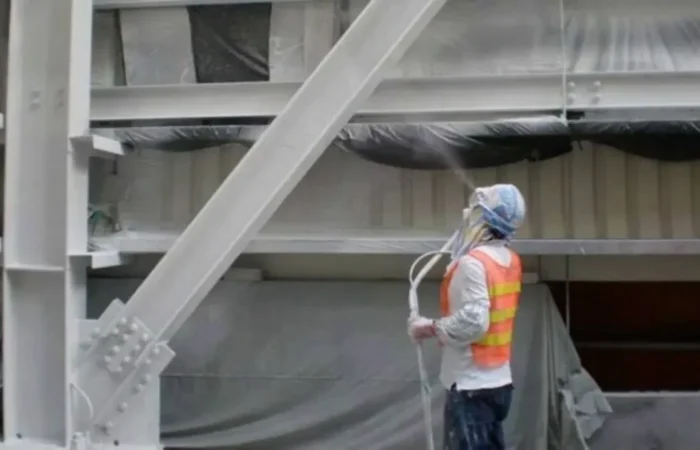
5.2 Spray-Applied Fire Resistive Materials (SFRM)
Spray-applied fireproofing is one of the most widely used PFP methods for steel structures.
Types of SFRM
-
Cementitious fireproofing
-
Mineral fiber fireproofing
-
Gypsum-based fireproofing
Applications
-
Warehouses
-
Factories
-
Power plants
-
Parking garages
-
Industrial buildings
Advantages
-
Cost-effective for large projects
-
Fire resistance up to 4 hours
-
Rapid application
Limitations
-
Rough surface finish
-
Requires protection in exposed or high-impact areas
DTC ensures proper density, thickness, and adhesion through strict quality control.
5.3 Fireproof Boards and Encasement Systems
Fireproof boards are rigid systems used to fully encase steel members.
Common Board Types
-
Calcium silicate boards
-
Fire-rated gypsum boards
-
Cement-based boards
-
Mineral wool panels
Applications
-
Hospitals
-
Schools
-
Data centers
-
Residential and commercial buildings
Advantages
-
Clean and dry installation
-
High durability
-
Excellent fire and acoustic performance
-
Minimal dust during installation
5.4 Concrete Encasement for Steel
Concrete encasement is a traditional yet highly effective passive fire protection method.
Applications
-
Structural columns
-
Cores and shear walls
-
Heavy industrial structures
Benefits
-
High fire resistance
-
Long service life
-
Structural reinforcement
Challenges
-
Increased dead load
-
Reduced design flexibility
5.5 Flexible Fire Protection Systems
Flexible fire protection systems include:
-
Mineral fiber blankets
-
Wrap systems
-
Pre-formed fire sleeves
Applications
-
Retrofit projects
-
Irregular steel sections
-
Mechanical rooms and service areas
6. Passive Fire Protection Design Considerations
6.1 Section Factor (Hp/A)
The section factor determines how quickly steel heats up during a fire. Higher section factors require thicker fire protection.
6.2 Environmental Conditions
Saudi Arabia’s climate requires PFP systems that withstand:
-
High ambient temperatures
-
Humidity in coastal areas
-
Dust and sand exposure
-
Industrial corrosion
6.3 Durability and Maintenance
Passive fire protection systems must resist:
-
Mechanical damage
-
Vibration
-
Moisture ingress
-
Chemical exposure
DTC selects systems with proven long-term performance.
7. Applications of Passive Fire Protection in Saudi Arabia
7.1 Industrial Facilities
-
Manufacturing plants
-
Steel fabrication units
-
Chemical processing facilities
High fire loads demand robust passive fire protection systems.
7.2 Warehouses and Logistics Centers
Large-span steel structures require:
-
Spray-applied fireproofing
-
High fire resistance ratings
-
Civil Defense approval
7.3 Oil & Gas and Energy Sector
-
Refineries
-
Power plants
-
Substations
Passive fire protection systems must withstand extreme fire scenarios.
7.4 Commercial Buildings
-
Offices
-
Malls
-
Hotels
Aesthetic considerations often favor intumescent coatings.
8. Installation Methodology at DTC General Contracting
DTC follows approved method statements for passive fire protection works:
-
Surface inspection and preparation
-
Cleaning and rust removal
-
Primer application (if required)
-
Application of fire protection system
-
Thickness measurement
-
Adhesion and density testing
-
Final inspection and certification
Every project is documented and approved by relevant authorities.
9. Inspection, Testing, and Quality Assurance
Quality control includes:
-
Dry film thickness measurements
-
Density testing for SFRM
-
Adhesion testing
-
Visual inspection
-
Compliance documentation
DTC ensures full traceability and certification.
10. Maintenance of Passive Fire Protection Systems
Passive fire protection systems must be:
-
Inspected periodically
-
Repaired if damaged
-
Reapplied when compromised
-
Protected during maintenance works
Regular inspections ensure long-term compliance and safety.
11. Why Choose DTC General Contracting
DTC General Contracting is a trusted specialist in passive fire protection for steel structures in Saudi Arabia, offering:
-
Certified fire protection systems
-
Experienced engineering and application teams
-
Compliance with SBC, ASTM, UL, EN, and NFPA
-
Turnkey PFP solutions
-
Proven performance in industrial and commercial projects
12. Conclusion
Passive fire protection is a critical component of steel structure safety. Without adequate PFP systems, steel structures are vulnerable to rapid strength loss and collapse during fire events.
DTC General Contracting delivers reliable, tested, and compliant passive fire protection solutions that safeguard lives, assets, and infrastructure. Through advanced materials, expert application, and rigorous quality control, DTC ensures steel structures across Saudi Arabia remain safe, resilient, and fully compliant throughout their service life.
Web Search Results Referenced
-
Passive Fire Protection for Steel Structures in Saudi Arabia – DTC
Detailed overview of PFP systems and their importance in industrial steel structures. -
Fireproofing of Steel Structures in Saudi Arabia – DTC
Description of DTC’s fireproofing systems including intumescent coatings, boards, and spray-applied solutions. -
Fire Painting and Steel Building Fire Protection Contractors – DTC
Covers fire painting and steel fire protection contracting services in KSA. -
Passive Fire Protection – TP Contracting
General explanation of passive fire protection principles and applications. -
Passive Fire Protection for Structural Steel – Promat (PDF)
Technical guide on fire protection boards and PFP systems for steel. -
Design of Passive Fire Protection – Scribd (PDF)
Technical document discussing PFP design principles for steel structures.