What Is the Difference Between Microtunneling and HDD?
Trenchless construction technologies have transformed how underground utilities are installed, repaired, and replaced. Instead of digging long open trenches that disrupt roads, businesses, and communities, engineers can now install pipelines beneath the surface with minimal disturbance. Among the most widely used trenchless methods are Microtunneling and Horizontal Directional Drilling (HDD). While both techniques achieve similar goals—installing underground pipelines without open excavation—they differ significantly in terms of accuracy, equipment, applications, and overall project suitability.
This comprehensive article explores the differences between microtunneling and HDD in depth, helping engineers, contractors, and project owners choose the right method for their needs.
Introduction to Trenchless Technology
Trenchless technology refers to a group of construction methods used to install or rehabilitate underground infrastructure with minimal surface disruption. These methods are particularly useful in urban environments, environmentally sensitive areas, and locations where open trenching would be impractical or too costly.
Two of the most prominent trenchless techniques are microtunneling and HDD. Although they are sometimes confused or used interchangeably by non-specialists, they serve different purposes and are suited to different project conditions.
What Is Microtunneling?
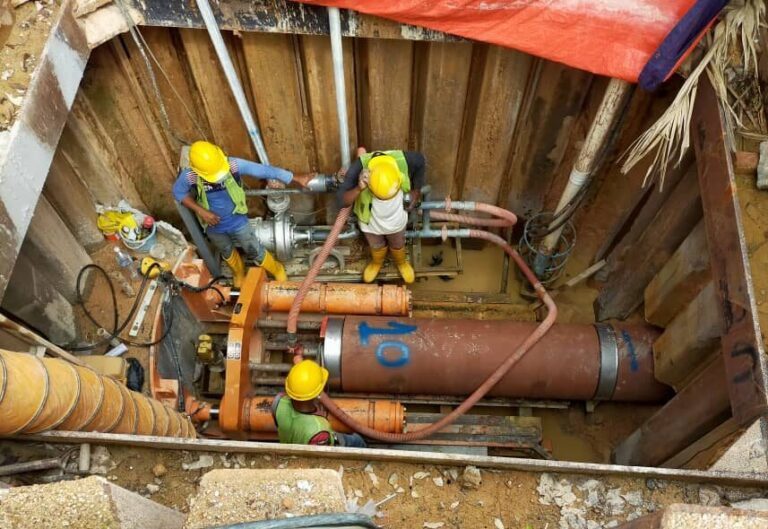
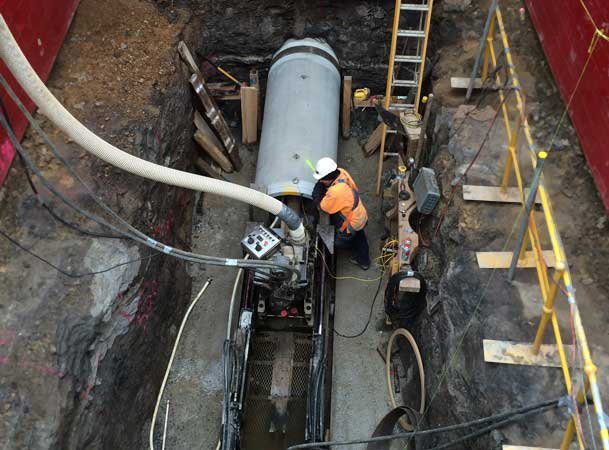
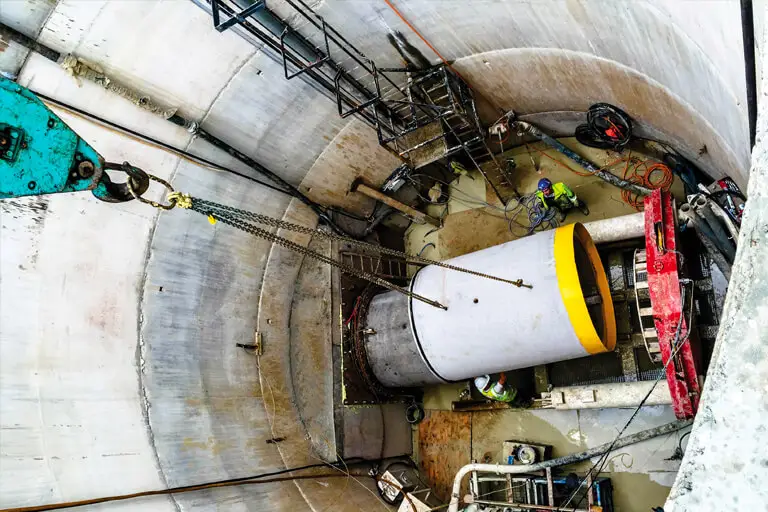
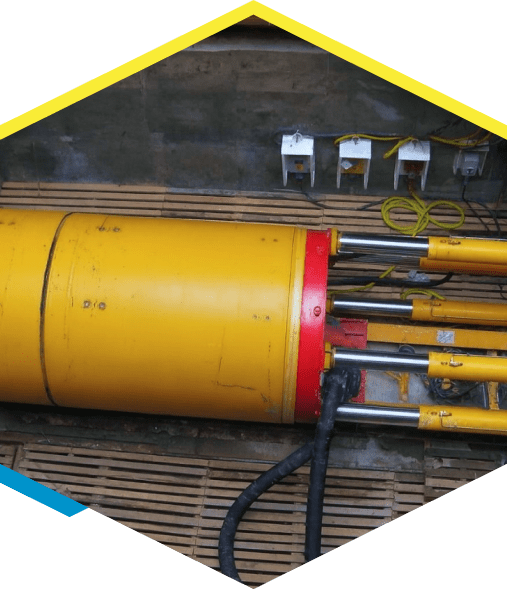
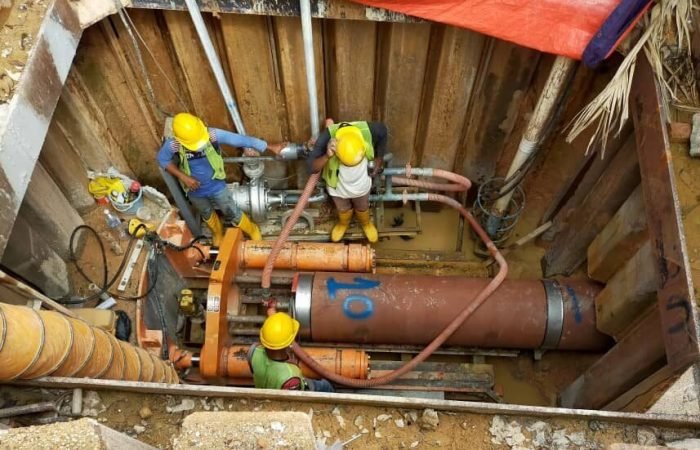
Microtunneling is a highly precise, remote-controlled pipe installation method. It uses a machine called a Microtunnel Boring Machine (MTBM) that excavates soil while pipes are simultaneously pushed (jacked) into place behind it.
How Microtunneling Works
The process typically involves:
- Constructing a launch shaft and a reception shaft
- Lowering the MTBM into the launch shaft
- Excavating soil using the MTBM
- Installing pipes by jacking them forward behind the machine
- Removing excavated material via slurry or conveyor systems
The entire operation is controlled from the surface using advanced guidance systems, often including laser alignment.
Key Features of Microtunneling
- Fully remote-controlled system
- High precision (millimeter-level accuracy)
- Continuous pipe installation during excavation
- Suitable for difficult soil and groundwater conditions
What Is Horizontal Directional Drilling (HDD)?
Horizontal Directional Drilling (HDD) is a steerable trenchless method used to install pipelines along a predetermined path by drilling a pilot hole and then enlarging it.
How HDD Works
The HDD process generally involves three stages:
- Pilot Drilling: A small-diameter hole is drilled along the desired path
- Reaming: The hole is enlarged using cutting tools
- Pullback: The pipe is pulled back through the enlarged hole
Drilling fluid (mud) is used to stabilize the borehole, cool the drill bit, and remove cuttings.
Key Features of HDD
- Steerable drilling system
- Flexible alignment (can follow curves)
- Capable of long-distance installations
- Does not require continuous pipe jacking
Core Differences Between Microtunneling and HDD
Understanding the key differences between these two methods is essential for selecting the appropriate technique.
1. Accuracy and Precision
Microtunneling is known for its exceptional accuracy, making it ideal for projects requiring precise alignment and grade control, such as gravity sewer systems.
HDD, while accurate, does not achieve the same level of precision. It is more suitable for pressure pipelines where exact slope is less critical.
👉 Summary:
- Microtunneling = ultra-high precision
- HDD = moderate precision
2. Installation Method
Microtunneling involves pushing pipes forward as excavation progresses. This ensures continuous support of the tunnel.
HDD installs pipes by pulling them back through a pre-drilled hole after excavation is complete.
👉 Summary:
- Microtunneling = pipe jacking
- HDD = pipe pullback
3. Equipment and Technology
Microtunneling uses sophisticated equipment such as MTBM, jacking systems, and slurry separation plants. These systems require significant setup and expertise.
HDD equipment includes drilling rigs, drill rods, and reamers, which are generally more mobile and easier to deploy.
👉 Summary:
- Microtunneling = complex, heavy equipment
- HDD = more flexible and mobile
4. Ground Conditions
Microtunneling performs exceptionally well in:
- Soft soils
- High groundwater conditions
- Unstable ground
HDD is suitable for:
- Mixed soils
- Clay, sand, and some rock formations
- Long horizontal crossings
However, HDD may face challenges in highly unstable or water-saturated soils.
5. Project Length
HDD is capable of installing pipelines over very long distances, often exceeding several kilometers.
Microtunneling is typically used for short to medium distances, depending on shaft spacing.
👉 Summary:
- Microtunneling = shorter drives
- HDD = longer distances
6. Alignment Flexibility
HDD allows for curved and complex alignments, making it ideal for navigating around obstacles.
Microtunneling generally follows a straight path, with limited ability to change direction.
7. Cost Considerations
Microtunneling projects tend to be more expensive due to:
- Specialized equipment
- Shaft construction
- Skilled labor
HDD is generally more cost-effective, especially for long-distance installations.
8. Environmental Impact
Both methods reduce surface disruption, but:
- Microtunneling has minimal risk of fluid leakage
- HDD carries a risk of frac-out (drilling fluid escaping to the surface)
9. Typical Applications
Microtunneling is used for:
- Gravity sewer systems
- Stormwater pipelines
- Urban infrastructure projects
- Crossings beneath railways and highways
HDD is used for:
- Water pipelines
- Oil and gas pipelines
- Cable conduits
- River and highway crossings
Advantages of Microtunneling
- Exceptional precision
- Safe in unstable and waterlogged soils
- Minimal surface settlement
- Ideal for sensitive urban environments
Disadvantages of Microtunneling
- High cost
- Requires shafts
- Limited flexibility in alignment
Advantages of HDD
- Cost-effective
- Long-distance capability
- Flexible routing
- Faster mobilization
Disadvantages of HDD
- Lower precision
- Risk of drilling fluid leakage
- Not ideal for gravity systems
Choosing the Right Method
Selecting between microtunneling and HDD depends on several factors:
Choose Microtunneling If:
- Precise grade control is required
- Ground conditions are unstable
- Working in dense urban areas
- Installing gravity sewers
Choose HDD If:
- Long-distance installation is needed
- Flexible alignment is required
- Budget constraints exist
- Installing pressure pipelines
Future Trends in Trenchless Technology
Both microtunneling and HDD continue to evolve with advancements in:
- Automation and robotics
- Real-time monitoring systems
- Improved drilling fluids
- Sustainable construction practices
As urbanization increases and environmental regulations become stricter, trenchless methods will play an even greater role in infrastructure development.
Microtunneling and HDD are both powerful trenchless technologies, but they serve different purposes. Microtunneling excels in precision, control, and challenging ground conditions, making it ideal for critical infrastructure like sewer systems. HDD, on the other hand, offers flexibility, cost efficiency, and long-distance capability, making it suitable for pipelines and utility installations.
Understanding the differences between these methods ensures better decision-making, optimized costs, and successful project outcomes.