Fireproofing Materials for Steel, Concrete, and Wood – DTC General Contracting
Fire safety is one of the most critical considerations in modern construction. As buildings grow larger, taller, and more complex, the materials used—steel, concrete, and wood—must be protected against fire to ensure life safety, structural integrity, and regulatory compliance. Fireproofing materials play a vital role in delaying fire spread, reducing structural damage, and allowing sufficient time for evacuation and firefighting.
At DTC General Contracting, fireproofing is a core service delivered across industrial, commercial, and infrastructure projects throughout Saudi Arabia. This article provides a comprehensive overview of fireproofing materials for steel, concrete, and wood, explaining their requirements, types, applications, and best practices in the Saudi construction environment.
1. Understanding Fireproofing and Passive Fire Protection
Fireproofing is part of Passive Fire Protection (PFP)—systems built into the structure that work automatically during a fire without human intervention or mechanical activation. Unlike active systems such as sprinklers or alarms, passive fire protection materials are always in place and continuously effective.
Objectives of Fireproofing Materials
Fireproofing materials are designed to:
-
Delay temperature rise in structural elements
-
Maintain load-bearing capacity during fire exposure
-
Prevent or slow fire spread between compartments
-
Protect escape routes and critical structural members
-
Comply with building codes and insurance requirements
In Saudi Arabia, where extreme temperatures, large industrial facilities, and high-value assets are common, the correct selection and application of fireproofing materials is essential.
2. Fireproofing Requirements in Saudi Arabia
2.1 Saudi Building Code (SBC)
The Saudi Building Code specifies minimum fire resistance ratings for:
-
Structural frames
-
Floors and roofs
-
Walls and columns
-
Fire compartments and exits
Fire resistance is typically expressed in time ratings such as:
-
30 minutes
-
60 minutes
-
90 minutes
-
120 minutes
-
180 minutes or more (industrial and oil & gas facilities)
2.2 International Standards Applied
DTC General Contracting applies globally recognized standards, including:
-
ASTM E119 / UL 263
-
EN 13381
-
NFPA 251
-
ISO 834
-
UL Listed and FM Approved fireproofing systems
These standards ensure that fireproofing materials perform predictably under real fire conditions.
3. Fireproofing Materials for Steel Structures
Steel is strong and versatile but highly vulnerable to fire. Without protection, steel rapidly loses strength when heated.
3.1 Why Steel Requires Fireproofing
-
Steel does not burn, but it softens and deforms
-
Structural failure can occur before fire suppression
-
Collapse risk increases dramatically at high temperatures
Fireproofing materials for steel act as thermal insulation, slowing heat transfer.
3.2 Intumescent Fireproofing Coatings
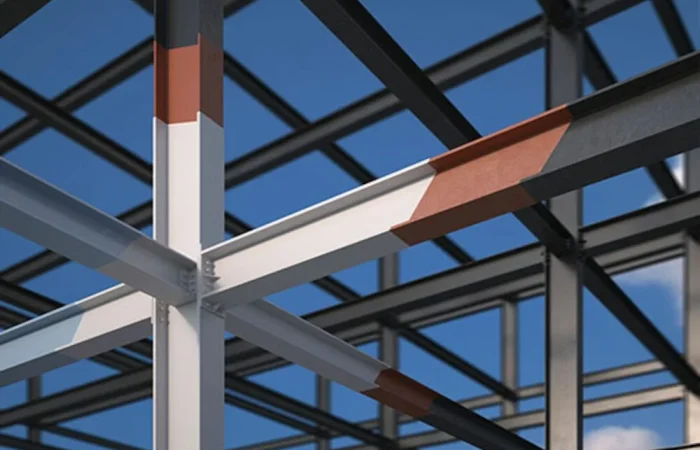
Intumescent coatings are thin-film paints that expand when exposed to fire, forming a thick insulating char.
Key Characteristics
-
Thin application (1–5 mm)
-
Smooth, architectural finish
-
Fire ratings up to 120 minutes
-
Lightweight
Applications
-
Commercial buildings
-
Offices and high-rise towers
-
Airports and malls
-
Exposed architectural steel
Advantages
-
Aesthetic appeal
-
Minimal impact on steel dimensions
-
Easy inspection and maintenance
DTC uses UL-approved and climate-resistant intumescent coatings suitable for Saudi conditions.
3.3 Spray-Applied Fireproofing (Cementitious & Mineral Fiber)
Spray-applied fireproofing uses cementitious or mineral fiber materials sprayed directly onto steel.
Common Materials
-
Gypsum-based cementitious fireproofing
-
Portland cement-based fireproofing
-
Mineral fiber fire-resistive materials
Applications
-
Warehouses
-
Factories
-
Power plants
-
Parking structures
-
Industrial facilities
Advantages
-
Cost-effective for large projects
-
High fire ratings (up to 4 hours)
-
Rapid application
Considerations
-
Rough finish
-
Requires protection from impact or moisture in exposed areas
3.4 Fireproof Boards and Encasement Systems
Fireproof boards physically encase steel members.
Typical Materials
-
Calcium silicate boards
-
Fire-rated gypsum boards
-
Cement-based boards
-
Mineral wool panels
Applications
-
Hospitals
-
Schools
-
Data centers
-
Residential and commercial buildings
Benefits
-
Clean installation
-
High durability
-
Excellent fire and acoustic performance
3.5 Concrete Encasement of Steel
Encasing steel in concrete provides inherent fire resistance.
Applications
-
Columns and structural cores
-
Industrial plants
-
Heavy-duty structures
Advantages
-
Extremely durable
-
Long-term fire protection
-
Structural enhancement
4. Fireproofing Materials for Concrete Structures
Concrete is naturally fire-resistant, but it is not fireproof. Under extreme heat, concrete can crack, spall, and expose reinforcement.
4.1 Fire Risks in Concrete Structures
-
Spalling due to trapped moisture
-
Loss of reinforcement protection
-
Reduction in load-bearing capacity
-
Damage to structural integrity
Fireproofing materials help enhance concrete’s fire resistance and prevent catastrophic damage.
4.2 Cementitious Fireproofing Materials
Cementitious coatings are widely used to enhance concrete fire resistance.
Materials Used
-
Gypsum-based mortars
-
Vermiculite and perlite aggregates
-
Lightweight cement-based fireproofing
Applications
-
Concrete beams and slabs
-
Tunnels and basements
-
Industrial floors and walls
4.3 Fireproof Boards for Concrete
Fire-rated boards are installed over concrete surfaces to:
-
Increase fire rating
-
Protect reinforcement
-
Improve compartmentation
Common Uses
-
Stairwells
-
Escape corridors
-
Structural walls
-
Utility rooms
4.4 Intumescent Coatings for Concrete
Intumescent coatings can also be applied to concrete surfaces where:
-
Thin protection is required
-
Aesthetic finish is important
-
Surface sealing is needed
4.5 Spray-Applied Fire Protection for Concrete
Spray-applied materials are used in:
-
Parking garages
-
Industrial facilities
-
Tunnels and infrastructure projects
They provide thermal insulation and spalling resistance.
5. Fireproofing Materials for Wood Structures
Wood is a combustible material and requires special fireproofing treatment to meet safety regulations.
5.1 Fire Behavior of Wood
-
Wood ignites and contributes to fire spread
-
Structural charring reduces cross-section
-
Fire resistance depends on thickness and treatment
Fireproofing materials reduce flame spread and slow combustion.
5.2 Fire-Retardant Treatments for Wood
Pressure-Impregnated Fire Retardants
-
Chemicals infused into wood
-
Reduce ignition and flame spread
-
Suitable for structural timber
Surface-Applied Fire Retardants
-
Coatings or sprays
-
Used for decorative wood and panels
5.3 Intumescent Paints for Wood
When exposed to fire, intumescent paints:
-
Expand to form a protective char
-
Reduce heat transfer
-
Delay ignition
Applications
-
Wooden ceilings
-
Decorative cladding
-
Timber beams
-
Interior architectural features
5.4 Fireproof Boards and Cladding Systems
Wood structures can be protected by:
-
Fire-rated gypsum boards
-
Cement boards
-
Mineral wool insulation
These systems isolate wood from fire exposure.
6. Applications Across Construction Sectors
6.1 Industrial Facilities
-
Factories
-
Warehouses
-
Refineries
-
Power plants
Fireproofing materials protect steel frames and concrete structures under high fire loads.
6.2 Commercial Buildings
-
Offices
-
Malls
-
Hotels
-
Airports
Aesthetic fireproofing solutions such as intumescent coatings are preferred.
6.3 Residential Projects
-
Apartments
-
Villas
-
Mixed-use developments
Fireproofing improves occupant safety and code compliance.
6.4 Infrastructure Projects
-
Tunnels
-
Parking structures
-
Transportation hubs
Durable cementitious fireproofing systems are essential.
7. Installation Methodology and Quality Control
DTC General Contracting follows strict procedures:
-
Surface inspection and preparation
-
Cleaning and priming
-
Application of fireproofing material
-
Thickness measurement
-
Adhesion and density testing
-
Final inspection and certification
All works comply with approved method statements and manufacturer guidelines.
8. Maintenance and Long-Term Performance
Fireproofing materials must be:
-
Inspected regularly
-
Repaired if damaged
-
Recoated when required
-
Protected from moisture and impact
Proper maintenance ensures continuous fire safety compliance.
9. Why Choose DTC General Contracting
DTC is a trusted provider of fireproofing solutions in Saudi Arabia, offering:
-
Certified fireproofing materials
-
Expertise across steel, concrete, and wood
-
Compliance with SBC, ASTM, UL, EN, and NFPA
-
Turnkey fireproofing services
-
Proven experience in industrial and commercial projects
10. Conclusion
Fireproofing materials are essential for protecting steel, concrete, and wood structures from fire-related failure. Each material behaves differently under fire exposure, requiring carefully selected and professionally applied fireproofing systems.
DTC General Contracting delivers reliable, compliant, and durable fireproofing solutions tailored to Saudi Arabia’s construction landscape. Through advanced materials, skilled application, and strict quality control, DTC ensures buildings remain safe, resilient, and compliant throughout their lifecycle.
Web Search Results Referenced
-
Fireproofing of Steel Structures in Saudi Arabia – DTC
Overview of DTC’s steel fireproofing systems including intumescent coatings, spray-applied fireproofing, and fireproof boards. -
Fireproofing Materials for Steel, Concrete, and Wood – IPP Magazine
Explains general fireproofing concepts and materials used across different construction materials. -
Fireproofing of Steel Structure Book – DTC
Technical reference discussing fireproofing materials such as vermiculite and perlite. -
Steel Structure Fireproofing in Saudi Arabia – DTC
Highlights the importance of fireproofing steel structures and failure prevention. -
Fireproofing Steel: Requirements, Applications, Types – Sherwin-Williams
Industry overview of fireproofing materials and performance requirements. -
Cementitious Paint and Coatings – Ibtikar Fireproofing KSA
Overview of cementitious fireproofing materials used for structural fire protection.