Fireproofing Methods for Structural Steel – DTC General Contracting
Structural steel is the backbone of modern construction, providing strength, flexibility, and durability for industrial, commercial, and residential buildings. However, steel’s structural integrity is highly vulnerable to high temperatures in the event of a fire. Unprotected steel can lose up to 50% of its strength at 550°C and up to 90% at 800°C, making fireproofing an essential safety requirement. DTC General Contracting in Saudi Arabia specializes in advanced fireproofing solutions, ensuring compliance with international standards while safeguarding lives and property.
1. Introduction to Fireproofing
Fireproofing, also called passive fire protection (PFP), involves insulating structural elements so that they maintain their load-bearing capacity during a fire. Unlike active systems such as sprinklers, passive fireproofing does not require activation; it works automatically to delay structural failure.
Key objectives of fireproofing include:
-
Protecting the building structure to prevent collapse.
-
Providing safe evacuation time for occupants.
-
Minimizing property damage.
-
Ensuring compliance with building codes and insurance requirements.
Fire Risk in Saudi Arabia
The Kingdom has witnessed rapid industrialization, particularly in cities like Dammam, Riyadh, Khobar, and Jeddah, which increases the need for robust fireproofing. Industries such as oil and gas, manufacturing, and large-scale warehouses benefit significantly from DTC’s expertise in steel structure fireproofing.
2. Fireproofing Methods Overview
DTC uses a combination of methods to protect steel structures, selecting the optimal technique based on project type, environmental conditions, and fire-rating requirements. The main categories are:
2.1 Intumescent Coatings
Intumescent coatings are paint-like materials that expand when exposed to heat, forming an insulating char that protects the steel.
Advantages:
-
Thin application (1–5 mm) preserves aesthetics.
-
Suitable for exposed steel in commercial buildings.
-
Easy to apply with spray, brush, or roller.
Application Process:
-
Surface cleaning and priming.
-
Uniform coating application.
-
Drying and inspection.
DTC Implementation: DTC applies advanced intumescent coatings that meet ASTM E119 and EN 13381 standards, ensuring fire resistance up to 120 minutes for commercial and industrial structures.
2.2 Spray-Applied Fire-Resistive Materials (SFRM)
Spray-applied materials like cementitious or mineral fiber mixtures are applied to steel beams and columns.
Advantages:
-
Economical for large industrial projects.
-
Provides high fire-resistance ratings (up to 4 hours).
-
Can be applied in irregular shapes and on structural assemblies.
Application Process:
-
Clean steel surface.
-
Apply primer if required.
-
Spray SFRM to specified thickness based on fire-rating.
DTC Expertise: SFRM is commonly used in warehouses and factories, protecting steel from high-temperature fires.
2.3 Fireproof Boards
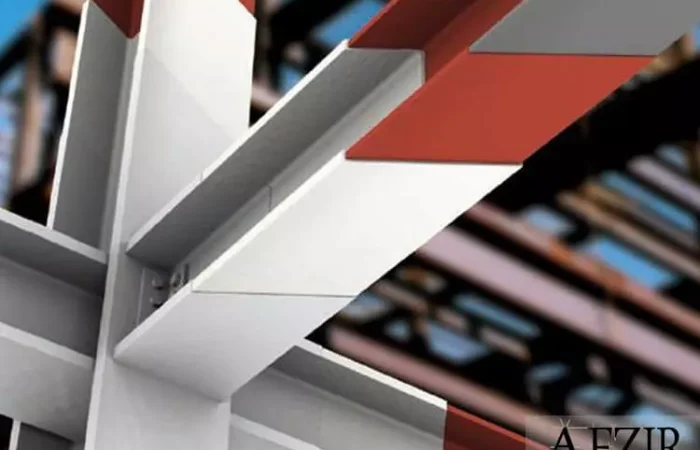
Rigid boards, such as calcium silicate or gypsum boards, encase steel members, providing thermal insulation.
Advantages:
-
High durability and impact resistance.
-
Easy to achieve higher fire ratings.
-
Compatible with modular construction.
Installation Process:
-
Cut boards to size.
-
Fix boards around steel members using mechanical fasteners.
-
Seal joints with fire-resistant sealants.
DTC Use Case: Often used in hospitals, schools, and high-rise commercial buildings.
2.4 Flexible Blankets
These are flexible sheets or blankets made of mineral fibers, installed around steel columns and beams.
Advantages:
-
Lightweight and easy to transport.
-
Ideal for retrofit projects.
-
Provides up to 2-hour fire rating depending on thickness.
DTC Application: Particularly effective in industrial retrofits where steel is already erected.
2.5 Encapsulation with Concrete or Gypsum
Encasing steel in concrete or gypsum is a traditional yet highly effective method.
Advantages:
-
Extremely durable and robust.
-
Offers high fire resistance (2–4 hours or more).
-
Suitable for both new and existing structures.
Considerations: Requires structural allowances for added thickness, making it more suitable for structural cores or heavily loaded members.
3. Fireproofing Design Considerations
Effective fireproofing requires careful planning and engineering. DTC’s design approach includes:
-
Structural Analysis: Calculating steel temperatures during potential fire scenarios.
-
Fire Rating Selection: Selecting protection to meet 30, 60, 90, or 120-minute fire ratings.
-
Environmental Conditions: Considering humidity, temperature, and exposure to corrosive environments.
-
Aesthetic Requirements: Selecting coatings or boards that match architectural vision.
-
Maintenance and Durability: Ensuring long-term adhesion and performance in Saudi Arabia’s climate.
4. Installation Best Practices
DTC follows a stringent method of statement for fireproofing steel:
-
Surface Preparation: Clean steel of dust, oil, and rust to enhance adhesion.
-
Primer Application: Optional primer depending on the fireproofing material.
-
Material Application: Apply coating, board, or blanket to exact thickness.
-
Inspection: Conduct destructive and non-destructive testing to verify thickness and adhesion.
-
Final Finishing: Paint or seal for aesthetics and environmental protection.
5. Compliance and Standards
DTC ensures all fireproofing methods comply with international and local standards:
-
ASTM E119 – Standard Test Methods for Fire Tests of Building Construction.
-
EN 13381 – European standard for fire-resistance of structural steel.
-
NFPA 251 – Fire tests for building construction and materials.
-
Saudi Building Code – Local compliance for fire safety in industrial and commercial projects.
6. Case Studies – DTC Projects
6.1 Industrial Warehouse, Dammam
-
Challenge: Protect large-span steel beams in a high-occupancy warehouse.
-
Solution: Spray-applied cementitious coating achieving 3-hour fire rating.
-
Outcome: Full compliance with safety standards, minimal downtime.
6.2 High-Rise Office, Riyadh
-
Challenge: Aesthetic protection of exposed steel columns.
-
Solution: Intumescent coating with high-end finish.
-
Outcome: Achieved 90-minute fire rating while maintaining architectural design.
6.3 Hospital, Khobar
-
Challenge: Ensure fireproofing in a sensitive healthcare environment.
-
Solution: Calcium silicate boards around steel frames.
-
Outcome: 2-hour fire resistance with clean installation minimizing dust and disruption.
7. Maintenance and Inspection
Regular inspection ensures long-term performance:
-
Check coating thickness and adhesion.
-
Repair any mechanical damage or corrosion.
-
Replace degraded boards or blankets.
-
Schedule inspections according to NFPA or local code requirements.
8. Innovations in Fireproofing
DTC is adopting modern technologies:
-
Advanced intumescent formulations for faster expansion and higher insulation.
-
Fiber-reinforced cementitious sprays for added durability.
-
Digital monitoring to track structural integrity in real-time.
-
Eco-friendly fireproof coatings to reduce environmental impact.
Fireproofing structural steel is vital for safety, compliance, and asset protection. DTC General Contracting offers comprehensive fireproofing solutions tailored to Saudi Arabia’s unique industrial, commercial, and residential environments. From spray-applied materials to intumescent coatings, fireproof boards, and flexible blankets, DTC ensures buildings remain safe, functional, and resilient in fire emergencies.
By combining engineering expertise, rigorous standards, and advanced fireproofing technologies, DTC is setting new benchmarks for steel structure protection in Saudi Arabia.
References & Further Reading