
Importance of ISO 10015:2019 – Competence Management & Training
Building Skilled Workforces Through International Training Standards
In the modern construction and industrial sectors, workforce competence plays a critical role in project success. Skilled engineers, technicians, and workers are essential for delivering high-quality construction projects, maintaining safety standards, and ensuring operational efficiency.
As construction projects become more complex and technologically advanced, companies must invest in structured training and competence development systems.
International standards such as ISO 10015:2019 provide organizations with frameworks for managing employee competence and training processes effectively.
For companies operating in competitive markets such as Saudi Arabia, implementing structured training systems demonstrates commitment to quality, safety, and continuous improvement.
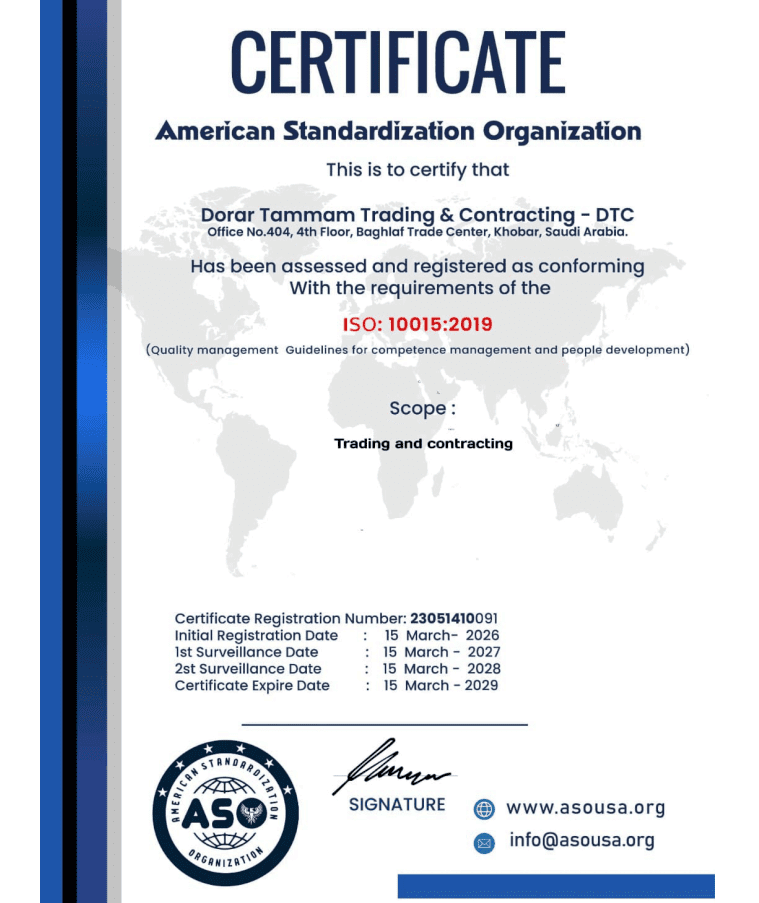
Among forward-thinking construction companies in the region, Dorrar Tammam Contracting (DTC) has successfully achieved ISO 10015:2019 certification, reflecting its dedication to developing a skilled workforce and maintaining high standards of competence in construction project execution.
What is ISO 10015:2019?
ISO 10015:2019 is an international standard developed by the International Organization for Standardization that provides guidelines for managing competence, training, and development within organizations.
The standard focuses on ensuring that employees have the necessary skills, knowledge, and capabilities to perform their roles effectively.
ISO 10015 provides guidance on:
-
identifying training needs
-
planning training programs
-
delivering training effectively
-
evaluating training outcomes
This framework helps organizations align workforce competence with business objectives.
Why Competence Management Is Critical in Construction
Construction projects involve complex engineering tasks, heavy equipment operations, and strict safety requirements.
A highly skilled workforce is essential for:
-
maintaining construction quality
-
ensuring worker safety
-
improving project efficiency
-
reducing operational risks
Without proper training systems, companies may face:
-
safety incidents
-
quality defects
-
project delays
-
inefficient operations
Implementing structured competence management systems helps organizations address these challenges.
Key Objectives of ISO 10015
ISO 10015 aims to improve workforce competence and training effectiveness.
The main objectives include:
✔ identifying competence gaps
✔ improving employee skills and knowledge
✔ aligning training programs with organizational goals
✔ enhancing overall performance
These objectives help organizations maintain a skilled and capable workforce.
Principles of ISO 10015 Competence Management
ISO 10015 is based on several key principles that support effective training and development.
1️⃣ Alignment with Organizational Goals
Training programs must align with business objectives and project requirements.
Organizations must ensure that workforce skills support operational needs.
2️⃣ Structured Training Processes
Training activities should follow structured processes to ensure effectiveness.
This includes planning, implementation, and evaluation.
3️⃣ Continuous Improvement
Organizations must continuously evaluate training programs and improve them based on performance outcomes.
4️⃣ Performance-Based Evaluation
Training effectiveness should be measured based on improvements in employee performance.
ISO 10015 Competence Management Framework
ISO 10015 provides a systematic approach to managing training and competence.
Identifying Training Needs
Organizations assess workforce skills and identify gaps that require training.
This may include technical skills, safety training, and operational competencies.
Planning Training Programs
Training programs are designed based on identified needs.
Plans include:
-
training objectives
-
training methods
-
required resources
Training Implementation
Training programs are delivered through:
-
classroom training
-
on-site training
-
technical workshops
Evaluation of Training Effectiveness
Organizations evaluate whether training programs achieve desired outcomes.
Evaluation methods may include:
-
performance assessments
-
feedback analysis
-
skill testing
Continuous Improvement
Training programs are updated based on evaluation results to improve effectiveness.
Benefits of ISO 10015 Certification
Implementing ISO 10015 provides several benefits for organizations.
Improved Workforce Skills
Structured training programs help employees develop the skills needed for their roles.
Enhanced Safety Performance
Proper training reduces workplace accidents and improves safety compliance.
Increased Productivity
Skilled workers perform tasks more efficiently, improving project performance.
Improved Quality of Work
Well-trained employees deliver higher-quality construction work.
DTC’s Commitment to Workforce Excellence
As a leading construction company in Saudi Arabia, Dorrar Tammam Contracting places strong emphasis on developing its workforce.
By achieving ISO 10015:2019 certification, DTC demonstrates its commitment to:
✔ workforce competence development
✔ structured training programs
✔ continuous improvement of employee skills
✔ international training standards
DTC ensures that its workforce is equipped with the knowledge and skills required to deliver high-quality construction projects.
Application of ISO 10015 in Construction Projects
ISO 10015 principles are applied across all stages of construction projects.
Technical Training
Workers receive training on construction methods, equipment operation, and safety procedures.
Safety Training
Employees are trained on workplace safety standards to reduce risks and ensure compliance.
Project-Specific Training
Training programs are tailored to specific project requirements.
Performance Evaluation
Employee performance is monitored to ensure that training programs are effective.
Importance of Workforce Development in Saudi Arabia
The construction sector in Saudi Arabia is expanding rapidly due to large-scale development projects.
National initiatives such as Saudi Vision 2030 emphasize the importance of workforce development and skill enhancement.
Companies that invest in training and competence management contribute to the growth of a skilled workforce that supports national development goals.
Future of Training and Competence Management in Construction
Training and competence management systems are evolving with the integration of modern technologies.
Future trends include:
-
digital training platforms
-
virtual reality training simulations
-
data-driven performance evaluation systems
These technologies improve training effectiveness and workforce development.
ISO 10015 and Workforce Excellence
ISO 10015:2019 provides a globally recognized framework for managing employee competence and training systems.
Organizations that implement structured training programs can improve workforce performance, enhance safety, and deliver higher-quality projects.
By achieving ISO 10015:2019 certification, Dorrar Tammam Contracting demonstrates its commitment to workforce excellence and continuous improvement.
This certification strengthens DTC’s ability to deliver reliable, high-quality construction services while maintaining a skilled and capable workforce.