VNA (Very Narrow Aisle) Warehousing and the Importance of Concrete Flooring
Why High-Precision Concrete Floors Are Essential for Modern Logistics Warehouses
Modern warehouse operations have evolved significantly as supply chains become more advanced and logistics efficiency becomes a priority. One of the most efficient warehouse designs used today is the Very Narrow Aisle (VNA) warehouse system, which allows companies to maximize storage capacity while optimizing operational efficiency.
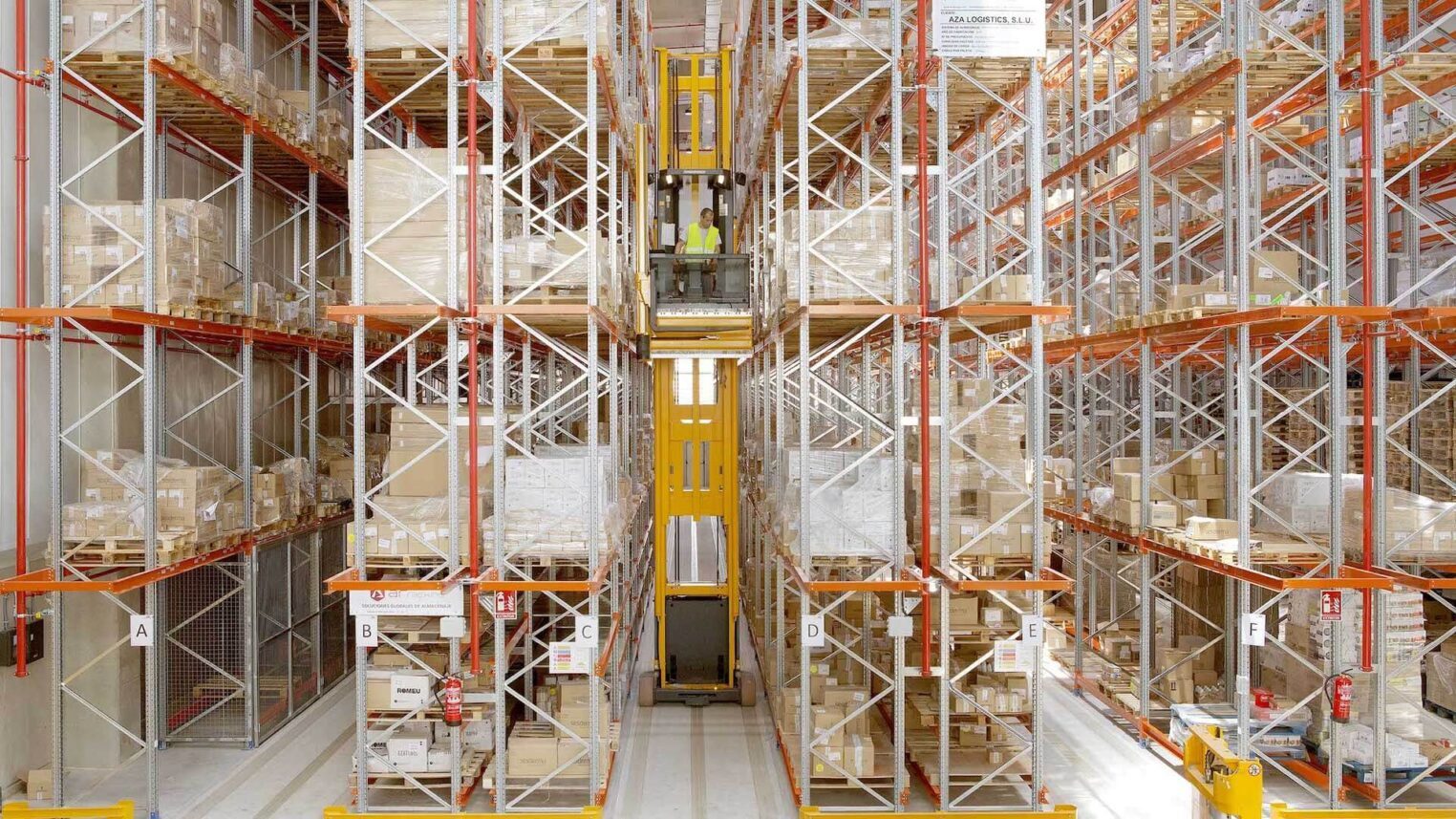
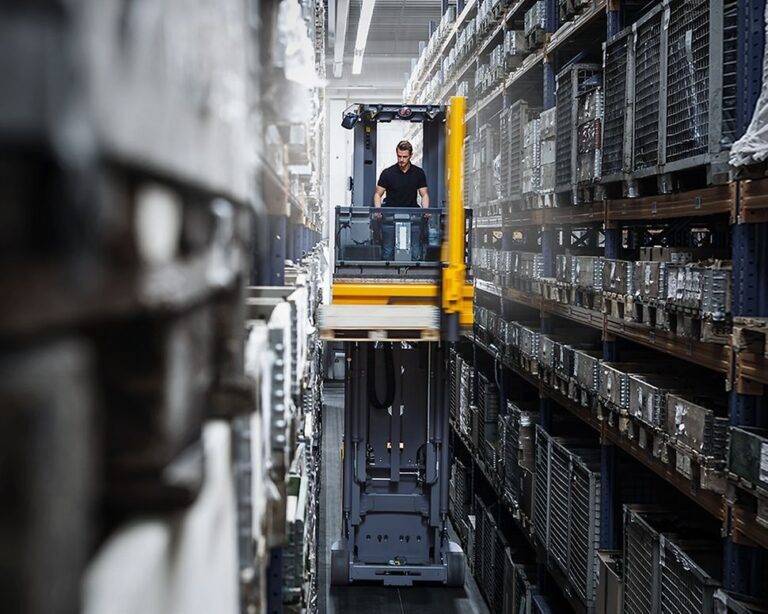
VNA warehouses use specialized forklifts and high-density racking systems that operate within extremely narrow aisles. While this design significantly increases storage density, it also requires extremely precise flooring systems.
The performance and safety of VNA warehouse operations depend heavily on the quality, flatness, and structural strength of the concrete flooring system.
Across logistics hubs such as Dammam, Riyadh, and Jeddah, modern warehouses increasingly rely on high-performance concrete flooring designed to meet strict flatness and load requirements.
Industrial flooring specialists such as Dorrar Tammam Contracting (DTC) play a critical role in delivering these high-tolerance flooring systems that support advanced logistics operations.
What Is VNA (Very Narrow Aisle) Warehousing?
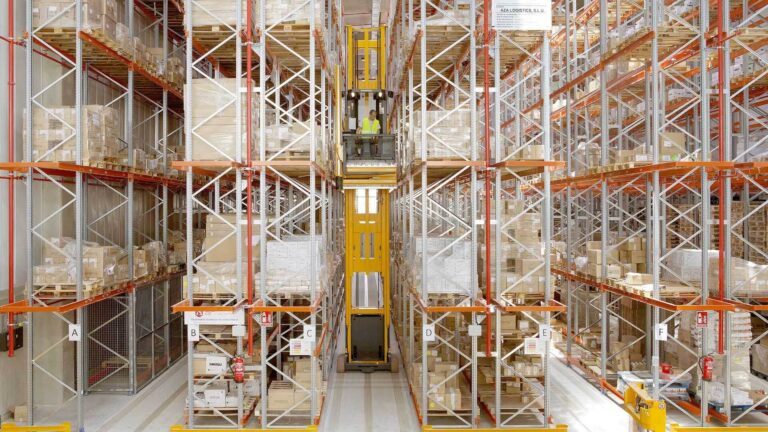
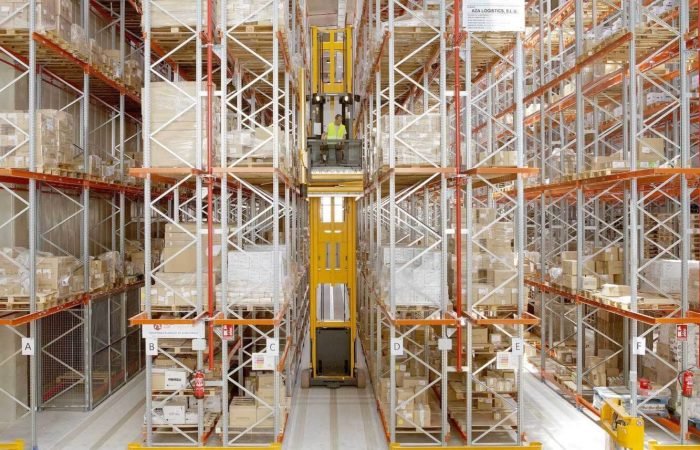
VNA warehousing is a storage system designed to maximize storage capacity by reducing aisle width between storage racks.
Traditional warehouses typically use aisles ranging between:
-
3.5 to 4 meters wide.
VNA warehouses reduce aisle widths to approximately:
-
1.6 to 2 meters.
This allows companies to install more storage racks and increase warehouse storage capacity.
However, operating forklifts in narrow aisles requires precise navigation and stable flooring surfaces.
Benefits of VNA Warehouse Systems
VNA warehouse designs offer several advantages for logistics and distribution operations.
Increased Storage Density
Narrow aisles allow more racking rows, increasing warehouse storage capacity.
Improved Space Utilization
VNA systems maximize vertical storage height and warehouse floor space.
Reduced Facility Footprint
Higher storage density reduces the need for larger warehouse buildings.
Improved Inventory Management
Advanced racking systems enable efficient inventory storage and retrieval.
These benefits make VNA warehousing ideal for high-volume logistics operations.
Why Concrete Flooring Is Critical for VNA Warehouses
While VNA warehouse systems provide operational advantages, they also impose strict requirements on warehouse flooring.
Unlike conventional warehouses, VNA systems rely on forklifts that travel long distances within extremely narrow aisles.
This means even minor floor deviations can cause:
-
forklift instability
-
pallet misalignment
-
equipment damage
-
operational inefficiencies
Concrete flooring must therefore meet extremely strict flatness and levelness standards.
Key Flooring Requirements for VNA Warehouses
Several factors must be considered when designing concrete flooring for VNA warehouse environments.
1️⃣ Floor Flatness and Levelness
Floor flatness and levelness are the most important characteristics of VNA flooring systems.
Two commonly used standards include:
-
FF (Floor Flatness)
-
FL (Floor Levelness)
These measurements determine how smooth and level a warehouse floor is.
VNA warehouses often require superflat floors, which have extremely tight flatness tolerances.
Superflat floors allow forklifts to travel safely along narrow aisles without instability.
2️⃣ Load-Bearing Capacity
Warehouse floors must support heavy loads from:
-
forklifts
-
pallet racks
-
stored goods
Concrete flooring must be engineered to withstand these loads without cracking or settlement.
Proper reinforcement and concrete mix design are essential.
3️⃣ Joint Design and Placement
Concrete floor joints must be carefully designed to prevent disruption of forklift movement.
Excessive joints may cause vibration and instability for VNA forklifts.
Modern warehouse floors often use large slab panels with controlled joint spacing.
4️⃣ Surface Durability
Warehouse floors experience heavy traffic and operational stress.
Concrete surfaces must be resistant to:
-
abrasion
-
impact
-
heavy equipment movement
Durable surface finishes help extend the lifespan of warehouse flooring systems.
Types of Concrete Flooring Used in VNA Warehouses
Several concrete flooring systems are commonly used in modern logistics facilities.
1️⃣ Superflat Concrete Floors
Superflat floors are specifically designed for VNA warehouse systems.
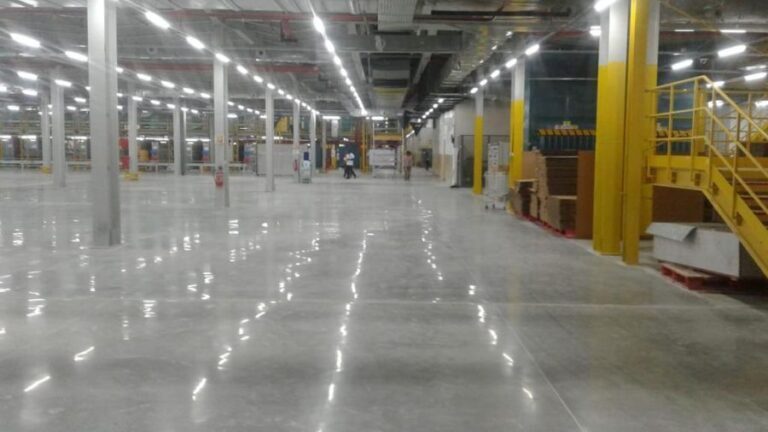
These floors have extremely tight flatness tolerances and are constructed using specialized laser screed technology.
Superflat floors allow forklifts to travel smoothly within narrow aisles.
2️⃣ Reinforced Industrial Concrete Floors
Industrial warehouse floors often use reinforced concrete slabs designed to support heavy loads.
Steel reinforcement improves structural performance and durability.
3️⃣ Polished Concrete Flooring
Polished concrete floors provide smooth surfaces and improved durability.
They also reduce dust formation and improve warehouse cleanliness.
4️⃣ Epoxy-Coated Industrial Floors
Epoxy coatings improve surface durability and chemical resistance.
These coatings are often used in high-traffic warehouse areas.
Construction Process for VNA Warehouse Concrete Floors
Constructing high-precision concrete flooring requires specialized construction techniques.
Phase 1: Subgrade Preparation
Proper subgrade preparation ensures floor stability.
Activities include:
-
soil compaction
-
base layer installation
-
moisture control
Phase 2: Reinforcement Installation
Reinforcement improves structural strength and prevents cracking.
Reinforcement methods include:
-
steel mesh
-
fiber reinforcement
Phase 3: Concrete Placement
Concrete is poured and leveled using laser-guided screed systems to achieve precise flatness tolerances.
Phase 4: Surface Finishing
Surface finishing ensures smooth and durable floor surfaces.
Finishing techniques may include:
-
power troweling
-
polishing
-
surface coatings
Phase 5: Quality Testing
Floor flatness and levelness are tested using specialized measurement equipment.
These tests ensure compliance with VNA flooring standards.
Challenges in VNA Warehouse Flooring Construction
Constructing high-tolerance warehouse floors involves several challenges.
Precision Requirements
Even small deviations in floor flatness can affect forklift performance.
Large Floor Areas
Warehouses often have large floor areas requiring consistent quality across the entire slab.
Heavy Load Requirements
Floors must support significant operational loads without structural failure.
Professional flooring contractors address these challenges through careful planning and advanced construction technologies.
Importance of Professional Industrial Flooring Contractors
Constructing VNA warehouse floors requires specialized expertise.
Experienced contractors ensure:
-
proper subgrade preparation
-
high-precision concrete placement
-
strict quality control
Industrial flooring companies such as Dorrar Tammam Contracting provide advanced flooring solutions designed to support modern warehouse operations.
Future of Warehouse Flooring in Logistics Infrastructure
As supply chains continue evolving, warehouses are becoming more automated and technologically advanced.
Future warehouse flooring systems will need to support:
-
automated guided vehicles (AGVs)
-
robotic storage systems
-
high-density racking systems
High-performance concrete flooring will remain essential for supporting these technologies.
The Critical Role of Concrete Flooring in VNA Warehouses
VNA warehouse systems offer significant operational advantages by maximizing storage capacity and improving logistics efficiency.
However, these systems require highly precise flooring infrastructure capable of supporting narrow aisle forklift operations.
Concrete flooring plays a critical role in ensuring warehouse safety, operational efficiency, and long-term durability.
By investing in high-quality concrete flooring systems that meet strict flatness and structural standards, companies can ensure reliable warehouse operations and maximize the performance of their logistics facilities.