TR34 VNA Aisle Tolerance Requirements
Understanding Superflat Concrete Flooring Standards for High-Density Warehouses
Modern logistics and distribution centers rely heavily on efficient warehouse layouts that maximize storage capacity while maintaining operational safety and productivity. One of the most widely used storage systems in modern warehouses is the Very Narrow Aisle (VNA) racking system.
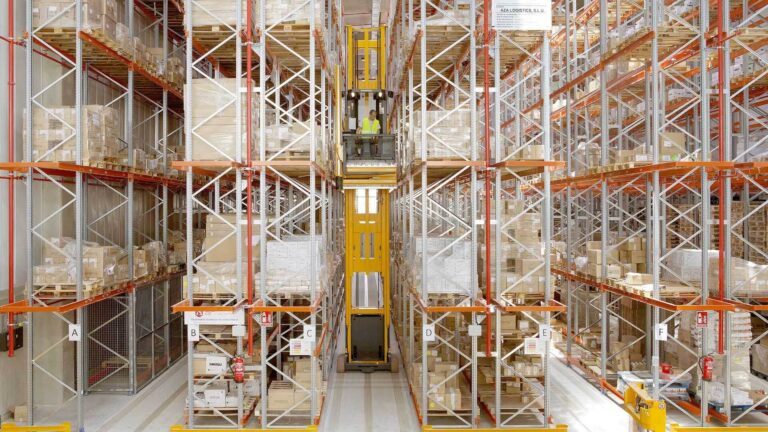
VNA warehouses allow operators to store more goods within the same building footprint by reducing aisle widths between pallet racks. While this design dramatically increases storage density, it also requires extremely precise concrete flooring.
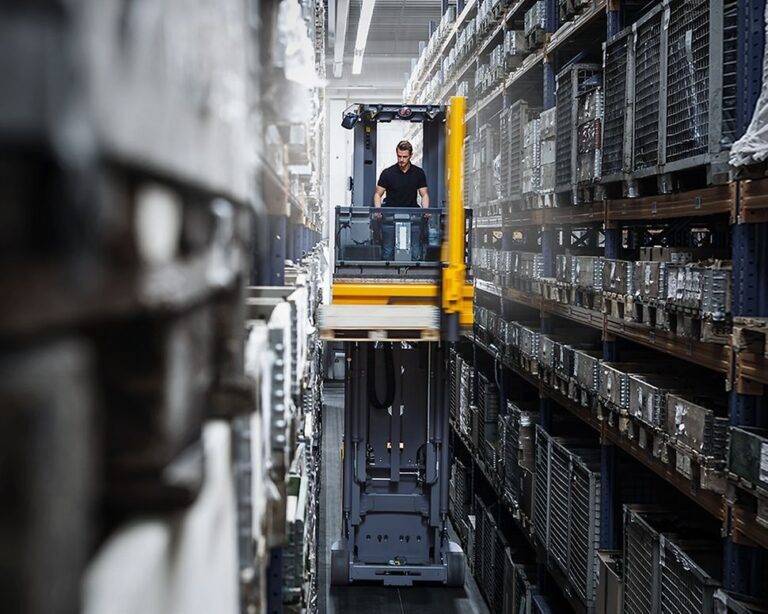
Forklifts operating within narrow aisles must travel long distances while lifting loads to heights that may exceed 12–15 meters. Even minor deviations in floor levelness or flatness can significantly affect forklift stability.
To address these challenges, warehouse floors are designed according to the internationally recognized TR34 concrete flooring standard, developed by the Concrete Society.
TR34 provides strict guidelines for floor design, construction, and tolerance measurement to ensure that industrial floors meet the demanding requirements of VNA warehouse systems.
Across logistics hubs such as Dammam, Riyadh, and Jeddah, developers increasingly require TR34-compliant flooring systems for modern warehouse construction.
Industrial flooring specialists such as Dorrar Tammam Contracting (DTC) deliver these high-precision concrete floors designed specifically for VNA logistics operations.
What Is TR34?
TR34 is a technical guide for designing and constructing industrial concrete floors.
The document provides recommendations for:
-
structural design of concrete slabs
-
reinforcement systems
-
joint placement
-
floor flatness and levelness tolerances
TR34 is widely used in industrial and logistics facilities around the world to ensure high-quality flooring performance.
Why VNA Warehouses Require Strict Flooring Tolerances
VNA warehouses operate with extremely narrow aisles, typically ranging between:
1.6 m to 2.0 m
Specialized forklifts travel along these aisles with minimal clearance between the forklift and the storage racks.
Because forklifts lift loads to significant heights, even small floor deviations can cause equipment instability.
Problems caused by poor floor tolerances include:
-
forklift vibration
-
mast misalignment
-
pallet handling errors
-
rack damage
-
increased accident risk
TR34 tolerance requirements help prevent these problems.
Understanding Floor Flatness and Levelness
Two key parameters determine warehouse floor quality.
Floor Flatness
Flatness refers to how smooth the floor surface is over short distances.
It ensures that forklift wheels remain stable when moving along warehouse aisles.
Floor Levelness
Levelness refers to the slope or elevation difference across longer distances.
Level floors prevent forklifts from leaning when lifting loads to high rack levels.
Both flatness and levelness are critical in VNA warehouse environments.
TR34 Superflat Floor Categories
TR34 defines several floor classes depending on building usage.
For VNA warehouses, superflat floors are required.
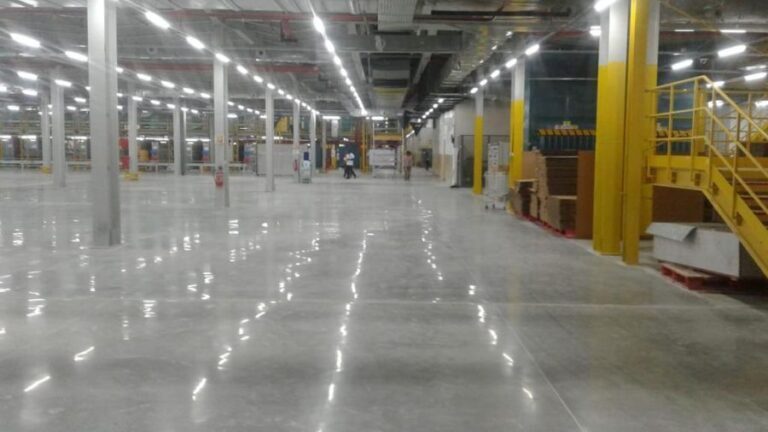
Superflat floors are designed with extremely tight tolerances to support high-precision forklift movement.
These floors are typically constructed within defined VNA aisles to achieve maximum accuracy.
Typical TR34 VNA Aisle Tolerance Requirements
The following tolerances are commonly required for VNA aisles:
Longitudinal Levelness (Along the Aisle)
Tolerance typically ranges within:
±10 mm over 3 meters
This ensures forklifts travel smoothly along long aisles.
Transverse Levelness (Across the Aisle)
Tolerance typically ranges within:
±3 mm over 1 meter
This prevents forklift masts from tilting sideways.
Surface Deviation
Surface variation must be extremely small to maintain forklift stability.
Typical TR34 limits include:
2–3 mm deviation over 300 mm
Joint Alignment
Joints must be aligned carefully to avoid forklift vibration and wheel impact.
In many VNA warehouses, joints are located outside the main aisle travel paths.
Measurement Methods for TR34 Floor Tolerances
Floor tolerances must be measured using specialized equipment.
Common measurement methods include:
Profilograph Testing
Profilograph machines measure floor profile along warehouse aisles.
They record deviations in floor elevation over long distances.
Digital Floor Profilers
Digital measuring devices provide precise readings of floor flatness and levelness.
These tools generate reports verifying compliance with TR34 requirements.
Laser Measurement Systems
Laser technology helps monitor floor elevation during concrete placement and finishing.
This improves construction accuracy.
Construction Methods for TR34 VNA Floors
Constructing TR34 floors requires specialized construction techniques.
Subgrade Preparation
The base layer must be stable and properly compacted to prevent floor settlement.
Activities include:
-
soil stabilization
-
base layer compaction
-
moisture barrier installation
Reinforcement Systems
Reinforcement improves slab performance and crack resistance.
Typical reinforcement systems include:
-
steel mesh
-
macro-fiber reinforcement
Laser Screed Concrete Placement
Laser screed technology allows precise leveling of concrete slabs during placement.
This technology significantly improves floor flatness.
Power Trowel Finishing
Power trowels create smooth and durable floor surfaces.
This process also improves surface strength.
Quality Control Testing
After curing, floors are tested to verify compliance with TR34 tolerance requirements.
Testing ensures the floor meets operational standards.
Challenges in Achieving TR34 VNA Floor Tolerances
Achieving TR34 tolerances requires careful planning and execution.
Common challenges include:
Large Warehouse Areas
Modern warehouses may exceed 30,000–50,000 m², requiring consistent floor quality across large surfaces.
Concrete Shrinkage
Concrete shrinkage during curing can affect floor flatness.
Proper mix design and curing methods are essential.
Construction Precision
Even small errors during finishing can cause floor deviations that affect VNA operations.
Experienced construction teams are required.
Role of Industrial Flooring Specialists
Because TR34 floors require extremely high precision, warehouse developers must work with experienced flooring contractors.
Professional contractors ensure:
-
accurate floor design
-
precise concrete placement
-
strict tolerance verification
Companies such as Dorrar Tammam Contracting provide specialized industrial flooring services designed for VNA warehouses and logistics facilities.
Future of Superflat Warehouse Flooring
Warehouse automation is increasing rapidly.
Modern facilities increasingly use:
-
automated guided vehicles (AGVs)
-
robotic pallet systems
-
automated storage and retrieval systems (ASRS)
These technologies require even stricter floor tolerances than traditional forklift operations.
TR34 flooring standards will remain essential for supporting the future of warehouse automation.
Why TR34 Tolerances Are Essential for VNA Warehouses
VNA warehouses allow logistics companies to maximize storage capacity and improve operational efficiency.
However, these systems rely heavily on extremely precise concrete flooring.
TR34 standards provide the guidelines necessary to achieve these high-precision floors.
By implementing TR34-compliant flooring systems, warehouse developers can ensure:
-
safe forklift operation
-
improved warehouse productivity
-
reduced equipment maintenance
-
long-term flooring durability
Investing in high-quality industrial flooring is therefore a critical component of modern warehouse construction.