Procurement Plan for Industrial Projects
Introduction
In Saudi Arabia’s rapidly expanding industrial sector, large projects such as factories, warehouses, power plants, and refineries depend on more than just engineering and design. Success relies on a well-structured procurement plan for industrial projects.
A strong procurement plan ensures that the right materials, machinery, and subcontracted services are delivered on time, at the right cost, and to the required standards. Without one, projects face delays, budget overruns, and quality risks.
This article breaks down the phases, strategies, and benefits of procurement planning for industrial projects, with a focus on the Saudi Arabian market under Vision 2030.
Why Procurement Planning is Essential
Industrial projects are complex, involving:
-
Civil works – concrete, steel structures, foundations.
-
Mechanical and electrical systems – HVAC, transformers, piping, switchgear.
-
Heavy equipment – cranes, turbines, boilers.
-
Specialized subcontractors – MEP, steel erection, instrumentation.
Without a structured procurement plan:
-
Long-lead items may arrive late, halting construction.
-
Poor vendor selection can cause quality failures.
-
Weak logistics planning may lead to customs delays.
-
Costs spiral due to ineffective negotiations.
A procurement plan for industrial projects minimizes these risks by providing a step-by-step roadmap.
Key Phases of a Procurement Plan for Industrial Projects
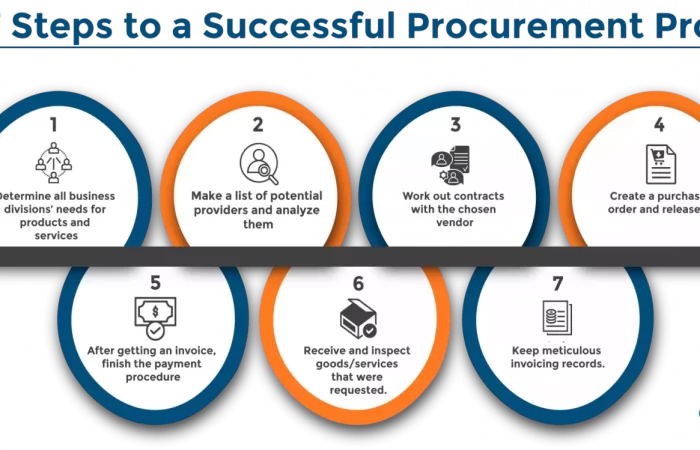
1. Pre-Procurement Planning
This stage sets the foundation for success.
-
Define the Bill of Quantities (BOQ) and scope of work.
-
Identify long-lead equipment like HVAC systems or turbines.
-
Prequalify vendors based on technical capacity and financial strength.
-
Develop a procurement schedule aligned with construction milestones.
📌 Example: Early identification of critical imports in Jubail Industrial City prevents shipment delays.
2. Tendering and Vendor Selection
The tendering process ensures transparency and competitiveness.
-
Prepare RFQs/RFPs with technical and commercial requirements.
-
Conduct technical evaluations of bids for compliance.
-
Assess financial offers for competitiveness.
-
Award contracts with clear delivery schedules, warranties, and penalties.
📌 NEOM Example: Only prequalified suppliers meeting international standards are invited, reducing risks.
3. Procurement Execution
Once contracts are signed, execution ensures timely delivery.
-
Place and track purchase orders.
-
Conduct factory inspections and quality testing.
-
Manage logistics, shipping, and customs clearance.
-
Engage subcontractors for specialized works (MEP, HVAC, steel erection).
📌 Riyadh Example: Proactive customs planning reduces border clearance delays.
4. Site Material Control & Installation
Efficient site control prevents waste and delays.
-
Implement ERP or tracking systems for inventory.
-
Issue materials as per construction sequence.
-
Ensure subcontractor mobilization matches delivery schedules.
📌 Dammam Example: IoT-based warehouse management improved efficiency for industrial warehouses.
5. Procurement Closeout & Handover
Final closure secures compliance and project completion.
-
Verify deliveries against purchase orders.
-
Collect O&M manuals, warranties, and spare parts.
-
Release performance bonds after acceptance.
-
Record vendor performance evaluations for future projects.
Procurement Schedule Example
| Package | Start | Award | Delivery | Installation |
|---|---|---|---|---|
| Structural Steel | Month 1 | Month 2 | Month 5 | Month 6 |
| HVAC Systems | Month 2 | Month 3 | Month 7 | Month 8 |
| Transformers | Month 1 | Month 2 | Month 9 | Month 10 |
| Cranes | Month 2 | Month 3 | Month 8 | Month 9 |
| MEP Subcontractors | Month 3 | Month 4 | Ongoing | Month 12 |
Benefits of a Strong Procurement Plan
-
Cost Efficiency – Better pricing through competitive tendering.
-
Time Savings – Delivery aligned with construction progress.
-
Quality Assurance – Compliance with international and Saudi standards.
-
Risk Mitigation – Reduced vendor and logistics risks.
-
Competitive Advantage – Strong positioning in Saudi Arabia’s industrial sector.
Best Practices in Saudi Arabia
-
Align procurement with Vision 2030 industrial development goals.
-
Build local supplier networks to reduce import reliance.
-
Use digital procurement platforms (ERP, AI tools).
-
Maintain a procurement risk register.
-
Adopt sustainable sourcing and green logistics.
Conclusion
The procurement plan for industrial projects is a strategic tool that determines whether a project is delivered on time, on budget, and at the required quality.
By following structured phases—pre-planning, tendering, execution, site control, and closeout—contractors in Riyadh, Jeddah, Dammam, Jubail, and NEOM can ensure industrial projects succeed in line with Saudi Arabia’s ambitious Vision 2030.