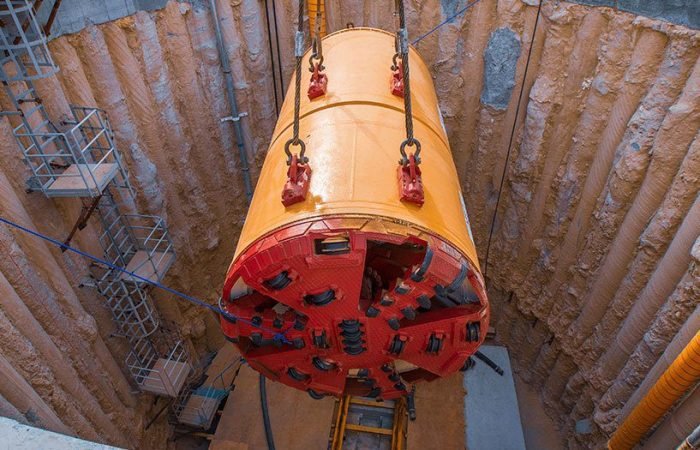
Pipe Jacking vs Microtunneling – Key Differences
Choosing the Right Trenchless Technology for Underground Infrastructure
As infrastructure projects continue to expand across Saudi Arabia, trenchless technologies have become essential for installing underground pipelines efficiently and safely. Among the most widely used methods are pipe jacking and microtunneling, both of which offer significant advantages over traditional open-cut excavation.
However, selecting the right method depends on several technical, environmental, and project-specific factors.
Understanding the differences between pipe jacking and microtunneling is crucial for engineers, developers, and contractors seeking optimal performance and cost efficiency.
What Is Pipe Jacking?
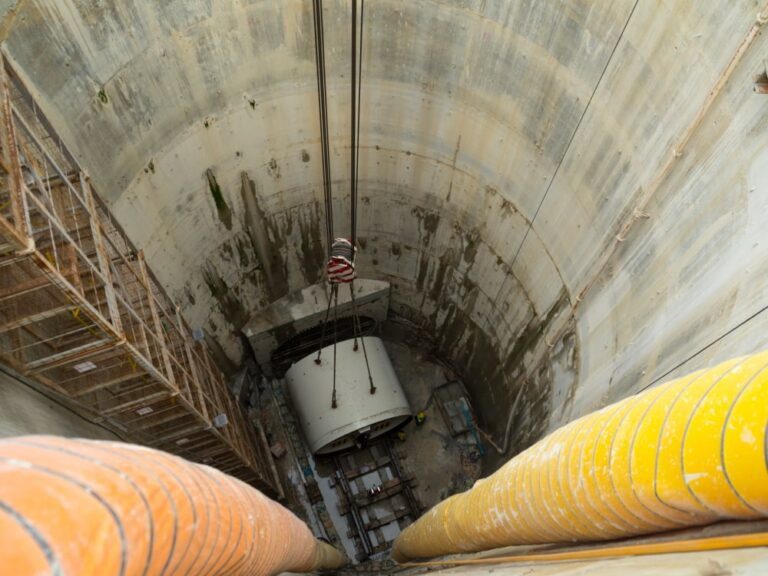
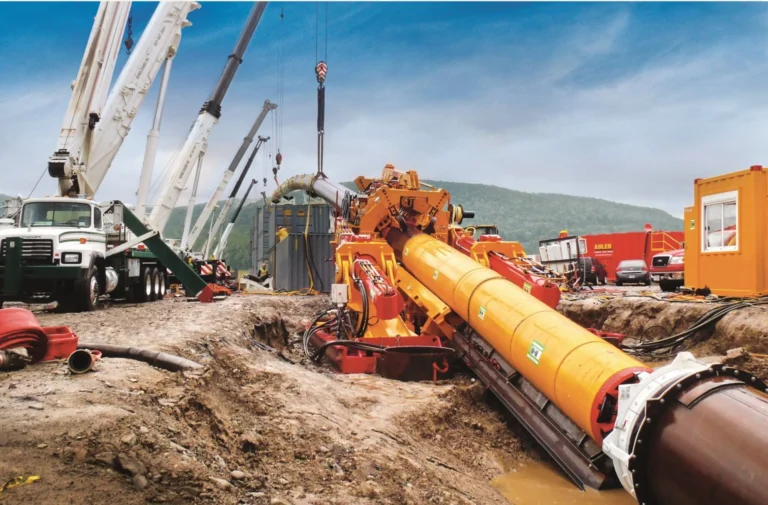
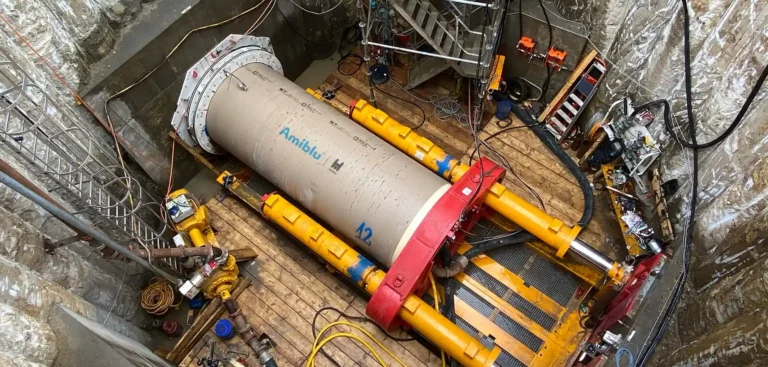
Pipe jacking is a trenchless construction method in which prefabricated pipes are pushed through the ground using hydraulic jacks from a launch shaft to a receiving shaft.
Key Characteristics
- pipes are installed simultaneously with excavation
- hydraulic jacks provide pushing force
- typically guided manually or with basic systems
Common Applications
- sewer pipelines
- stormwater systems
- large diameter pipelines
What Is Microtunneling?
Microtunneling is an advanced trenchless method that uses a remotely controlled microtunneling boring machine (MTBM) to excavate soil and install pipes simultaneously.
Key Characteristics
- fully automated and remote-controlled
- high-precision guidance systems
- continuous monitoring
Common Applications
- deep sewer systems
- gravity pipelines
- projects requiring high accuracy
Core Differences Between Pipe Jacking and Microtunneling
1️⃣ Level of Automation
Pipe Jacking
- partially mechanized
- may rely on manual control
Microtunneling
- fully automated
- remote-controlled operation
✔ Microtunneling offers higher precision due to automation.
2️⃣ Accuracy and Alignment Control
Pipe Jacking
- moderate accuracy
- suitable for less critical alignments
Microtunneling
- very high accuracy
- ideal for gravity sewer systems
✔ Microtunneling is preferred for projects requiring precise slope control.
3️⃣ Ground Condition Suitability
Pipe Jacking
- suitable for stable soils
- limited performance in complex conditions
Microtunneling
- suitable for soft ground, mixed soils, and water-bearing conditions
✔ Microtunneling performs better in challenging ground conditions.
4️⃣ Depth Capability
Pipe Jacking
- medium to deep installations
Microtunneling
- ideal for deep underground installations
✔ Microtunneling is more suitable for deep sewer systems.
5️⃣ Equipment Complexity
Pipe Jacking
- simpler equipment
- lower initial cost
Microtunneling
- advanced machinery (MTBM)
- higher initial investment
✔ Pipe jacking may be more cost-effective for simpler projects.
6️⃣ Project Cost Considerations
Pipe Jacking
- lower equipment cost
- may require more manual intervention
Microtunneling
- higher equipment cost
- more efficient and precise execution
✔ Total cost depends on project complexity and requirements.
7️⃣ Safety and Risk Management
Pipe Jacking
- higher reliance on manual processes
Microtunneling
- safer due to remote operation
✔ Microtunneling provides enhanced safety.
Comparison Table
| Feature | Pipe Jacking | Microtunneling |
|---|---|---|
| Automation | Medium | High |
| Accuracy | Moderate | Very High |
| Depth | Medium–Deep | Deep |
| Ground Conditions | Moderate | Complex |
| Equipment Cost | Lower | Higher |
| Safety | Moderate | High |
When to Choose Pipe Jacking
Pipe jacking is ideal for:
- large diameter pipelines
- projects with stable soil conditions
- medium-depth installations
- cost-sensitive projects
It provides a reliable and efficient solution for many infrastructure applications.
When to Choose Microtunneling
Microtunneling is best for:
- deep sewer systems
- gravity pipelines requiring precise slope
- complex ground conditions
- urban environments requiring minimal risk
It ensures high precision and safety in demanding projects.
Applications in Saudi Arabia
Both technologies are widely used across Saudi Arabia.
Municipal Infrastructure
- sewer and drainage systems
- water pipelines
Industrial Projects
- underground utilities
- process pipelines
Transportation Infrastructure
- road and railway crossings
DTC – Expert in Both Technologies
Providing the Right Solution for Every Project
As a leading trenchless contractor, Dorrar Tammam Contracting (DTC) provides both pipe jacking and microtunneling services.
DTC offers:
- detailed project assessment
- technology selection based on conditions
- advanced equipment and engineering expertise
- turnkey trenchless solutions
With operations in Dammam, Riyadh, and across the Kingdom, DTC supports a wide range of infrastructure projects.
How DTC Selects the Right Method
DTC evaluates several factors:
✔ soil and ground conditions
✔ depth requirements
✔ pipeline diameter
✔ project budget
✔ environmental considerations
This ensures optimal performance and cost efficiency.
Environmental and Sustainability Considerations
Both methods support sustainable construction by:
- reducing excavation
- minimizing environmental impact
- preserving infrastructure
This aligns with Saudi Vision 2030.
Future of Trenchless Technologies in Saudi Arabia
The demand for trenchless solutions will continue to grow due to:
- urban expansion
- industrial development
- infrastructure modernization
Both pipe jacking and microtunneling will remain essential technologies.
Selecting the Best Method
Choosing between pipe jacking and microtunneling depends on project requirements.
- Pipe jacking is ideal for simpler, large diameter installations.
- Microtunneling is best for high-precision, deep, and complex projects.
Partnering with an experienced contractor ensures the right technology is selected.