What is the Difference Between Pipe Jacking and Tunneling?
In the modern construction and infrastructure industry, underground construction methods play a critical role in developing urban environments without disrupting surface activities. Two commonly used trenchless construction techniques are pipe jacking and tunneling. While they may appear similar at first glance, they differ significantly in terms of methodology, applications, equipment, cost, and suitability for various projects.
This article provides a comprehensive explanation of the differences between pipe jacking and tunneling, with a focus on their relevance in infrastructure development, particularly in Saudi Arabia’s growing construction sector.
Introduction to Trenchless Construction
Trenchless construction methods are techniques used to install underground utilities, pipelines, and tunnels without extensive excavation. These methods are especially valuable in urban areas where open trenching would cause disruption to traffic, businesses, and daily life.
Both pipe jacking and tunneling fall under this category, but each serves different purposes and operates under distinct engineering principles.
What is Pipe Jacking?
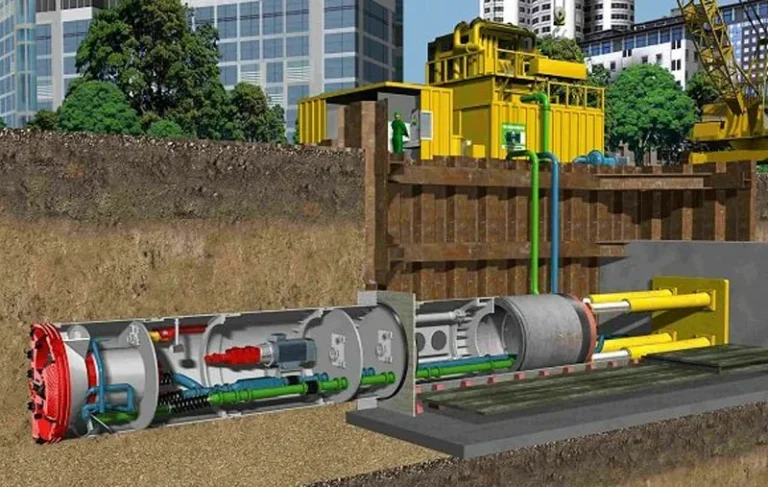
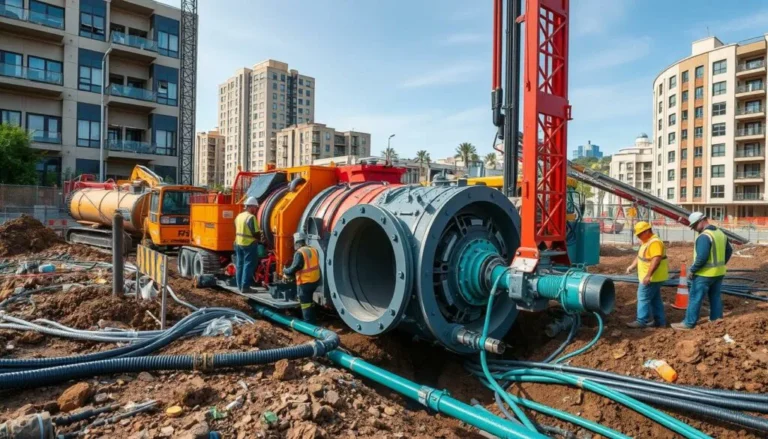
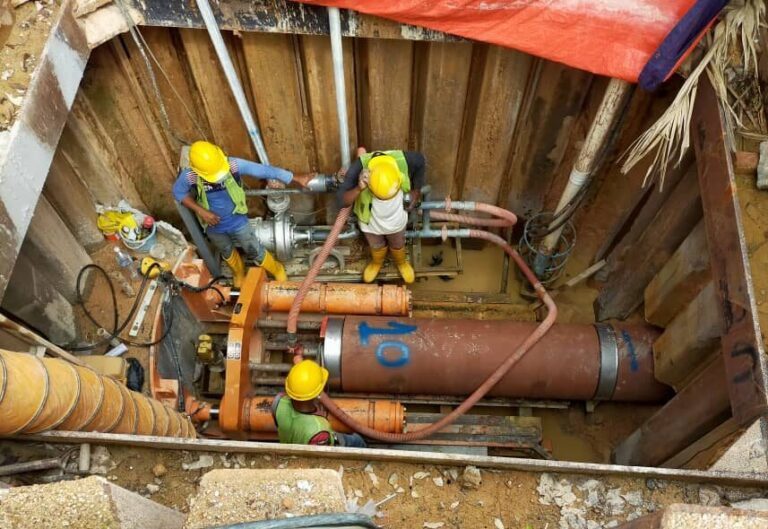
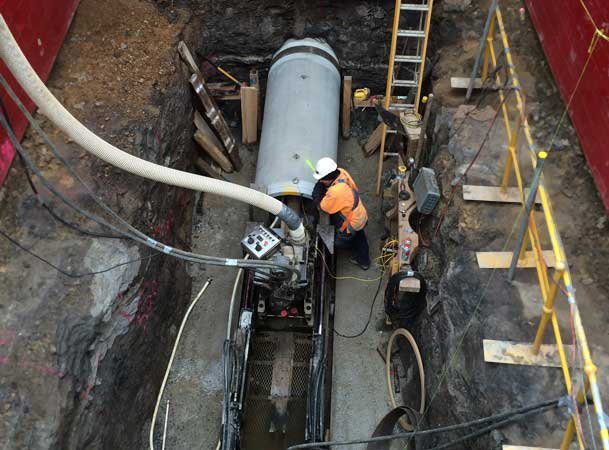
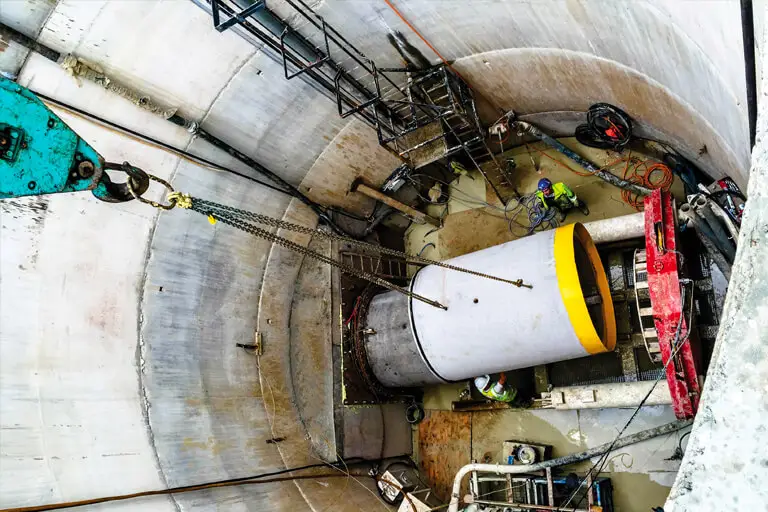
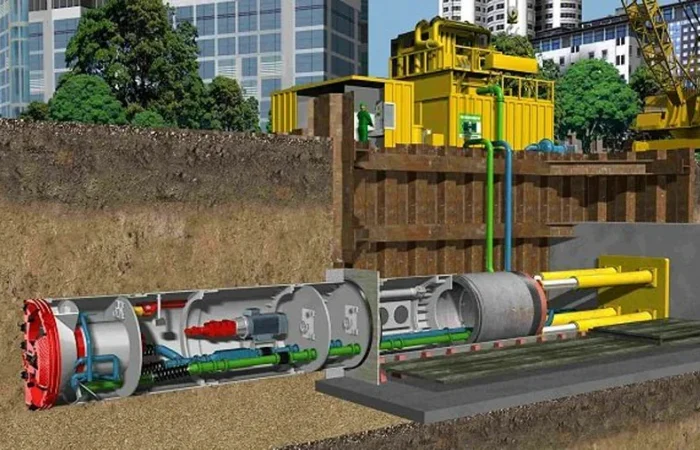
Pipe jacking is a trenchless construction method used to install pipelines underground by pushing prefabricated pipes through the soil using hydraulic jacks. The process involves:
- Excavating a launch shaft.
- Positioning a jacking frame with hydraulic rams.
- Pushing pipes forward while excavating soil at the front.
- Receiving the pipeline at a destination shaft.
Key Characteristics of Pipe Jacking
- Uses prefabricated pipes (usually concrete, steel, or GRP).
- Pipes are installed as the excavation progresses.
- Commonly used for sewer, water, and utility pipelines.
- Requires minimal surface disruption.
Applications of Pipe Jacking
- Sewer systems
- Stormwater drainage
- Water supply pipelines
- Utility conduits under roads, railways, and buildings
What is Tunneling?
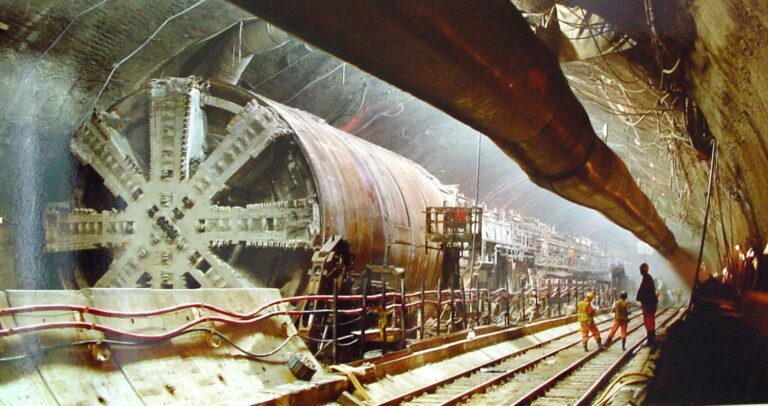
Tunneling is a broader underground construction method used to create tunnels of various sizes for transportation, utilities, or other infrastructure purposes. It involves excavating underground passages using manual methods, drilling and blasting, or advanced machinery like Tunnel Boring Machines (TBMs).
Key Characteristics of Tunneling
- Creates large underground passages.
- May or may not involve pipe installation.
- Often requires lining systems (concrete segments, shotcrete, etc.).
- Suitable for long distances and large diameters.
Applications of Tunneling
- Metro and railway systems
- Road tunnels
- Water conveyance tunnels
- Hydropower projects
- Utility corridors
Core Differences Between Pipe Jacking and Tunneling
1. Purpose and Function
The primary difference lies in their purpose:
- Pipe Jacking: Specifically designed for installing pipelines.
- Tunneling: Used to create underground passages, which may later accommodate utilities or transportation systems.
Pipe jacking is a specialized form of tunneling, but not all tunneling is pipe jacking.
2. Diameter and Scale
- Pipe Jacking: Typically used for smaller diameters (from a few hundred millimeters up to around 3–4 meters).
- Tunneling: Can accommodate much larger diameters, including tunnels wide enough for vehicles or trains.
3. Construction Method
Pipe Jacking Method:
- Pipes are pushed through the ground using hydraulic force.
- Excavation occurs simultaneously at the front.
- The pipe itself acts as the tunnel lining.
Tunneling Method:
- Excavation is performed first.
- Structural lining is installed afterward.
- May involve drilling, blasting, or TBMs.
4. Equipment Used
- Pipe Jacking:
- Hydraulic jacks
- Microtunneling machines
- Slurry systems
- Guidance systems
- Tunneling:
- Tunnel Boring Machines (TBMs)
- Roadheaders
- Drill and blast equipment
- Ventilation systems
5. Ground Conditions
Both methods can handle various soil conditions, but:
- Pipe jacking is highly effective in soft soils and mixed ground conditions.
- Tunneling is more versatile and can handle rock, hard soil, and complex geological formations.
6. Accuracy and Control
Pipe jacking systems often include advanced guidance systems, allowing for:
- High precision alignment
- Minimal deviation
- Ideal for utility installations
Tunneling, while precise, may not always achieve the same level of alignment accuracy without additional systems.
7. Surface Disruption
Both methods minimize surface disruption compared to open trenching, but:
- Pipe jacking causes very minimal disturbance, as it requires only entry and exit shafts.
- Tunneling may involve additional access points, ventilation shafts, and staging areas.
8. Cost Considerations
- Pipe Jacking:
- Lower cost for small to medium diameter pipelines.
- Cost-effective for short to medium distances.
- Tunneling:
- Higher initial investment.
- More economical for large-scale and long-distance projects.
9. Installation Speed
- Pipe jacking can be faster for pipeline installations.
- Tunneling may take longer due to complexity and scale.
10. Structural Support
- Pipe jacking uses the pipe itself as the structural lining.
- Tunneling requires separate lining systems, such as:
- Precast concrete segments
- Shotcrete
- Steel supports
Advantages of Pipe Jacking
- Minimal surface disruption
- High precision
- Reduced environmental impact
- Suitable for urban areas
- Faster installation for pipelines
- Lower labor requirements
Advantages of Tunneling
- Suitable for large-scale infrastructure
- Can handle complex geological conditions
- Ideal for transportation systems
- Flexible design options
- Capable of long-distance excavation
Limitations of Pipe Jacking
- Limited to smaller diameters
- Not suitable for large tunnels
- Requires precise setup
- Equipment limitations in very hard rock
Limitations of Tunneling
- High cost
- Longer project duration
- Complex planning and execution
- Requires skilled workforce and advanced machinery
Pipe Jacking vs Tunneling in Saudi Arabia
Saudi Arabia has witnessed rapid infrastructure development, driven by urban expansion and mega-projects under Vision 2030. Both pipe jacking and tunneling are widely used across the Kingdom.
Why Pipe Jacking is Popular in Saudi Arabia
- Urban development in cities like Riyadh, Jeddah, and Dammam
- Need for underground utility networks
- Avoiding disruption in busy urban areas
- Efficient installation of sewer and drainage systems
Why Tunneling is Essential
- Metro projects (e.g., Riyadh Metro)
- Highway tunnels
- Large-scale water transport systems
- Industrial infrastructure
Choosing Between Pipe Jacking and Tunneling
The choice depends on several factors:
1. Project Size
- Small pipelines → Pipe Jacking
- Large tunnels → Tunneling
2. Budget
- Limited budget → Pipe Jacking
- Large investment projects → Tunneling
3. Ground Conditions
- Soft soil → Pipe Jacking
- Hard rock → Tunneling
4. Project Duration
- Short timelines → Pipe Jacking
- Long-term infrastructure → Tunneling
5. Purpose
- Utility installation → Pipe Jacking
- Transportation or large passageways → Tunneling
Role of DTC General Contracting in Saudi Arabia
Companies like DTC General Contracting in Saudi Arabia play a crucial role in delivering advanced trenchless solutions. With expertise in both pipe jacking and tunneling, such contractors contribute to:
- Efficient infrastructure development
- High-quality engineering solutions
- Adoption of modern construction technologies
- Sustainable urban growth
Future Trends in Underground Construction
The future of pipe jacking and tunneling is driven by innovation and sustainability:
- Automation and robotics
- Advanced TBMs
- Smart monitoring systems
- Eco-friendly construction practices
- Increased use of trenchless technologies
Saudi Arabia is expected to continue investing heavily in underground infrastructure, making both methods increasingly important.
While pipe jacking and tunneling are both essential trenchless construction methods, they serve different purposes and are suited to different types of projects.
- Pipe jacking is ideal for installing pipelines with minimal disruption.
- Tunneling is suitable for large-scale underground passages and complex infrastructure.
Understanding their differences allows engineers, contractors, and project planners to choose the most efficient and cost-effective method for each project.
As Saudi Arabia continues to expand its infrastructure under Vision 2030, both pipe jacking and tunneling will remain vital tools in shaping the Kingdom’s modern landscape.