Micro Tunneling in Saudi Arabia and the Role of DTC Contracting
Saudi Arabia has undergone rapid infrastructure expansion over the past two decades, driven by population growth, urbanization, and ambitious national programs such as Vision 2030. Cities like Dammam, Riyadh, and Jeddah are witnessing massive investments in water transmission, sewage systems, stormwater drainage, and utility corridors. In this context, traditional open-cut excavation methods are increasingly being replaced by advanced underground construction techniques—most notably micro tunneling.
Micro tunneling is a trenchless construction method that enables the installation of pipelines underground with minimal surface disruption. This is particularly valuable in dense urban areas, industrial zones, and environmentally sensitive regions. As Saudi Arabia continues to modernize its infrastructure, micro tunneling has become a critical technology in delivering complex underground networks.
Companies like DTC Contracting play an important role in this ecosystem. While not a specialized micro tunneling contractor themselves, they serve as main contractors responsible for delivering large-scale infrastructure projects, often coordinating with niche subcontractors who execute trenchless works.
2. Understanding Micro Tunneling Technology
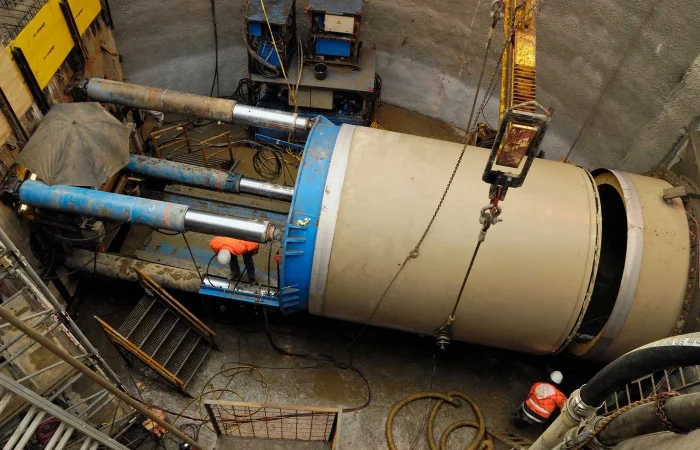
Micro tunneling is a highly controlled, remote-operated tunneling method that uses a Micro Tunnel Boring Machine (MTBM) combined with pipe jacking techniques. Unlike traditional tunneling, there is no need for workers to enter the tunnel during excavation, making it safer and more precise.
2.1 Key Components
A typical micro tunneling system consists of:
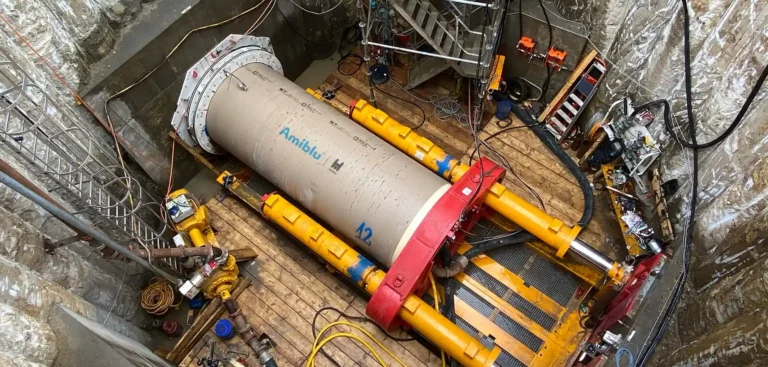
- MTBM (Micro Tunnel Boring Machine): A remotely controlled machine that excavates soil.
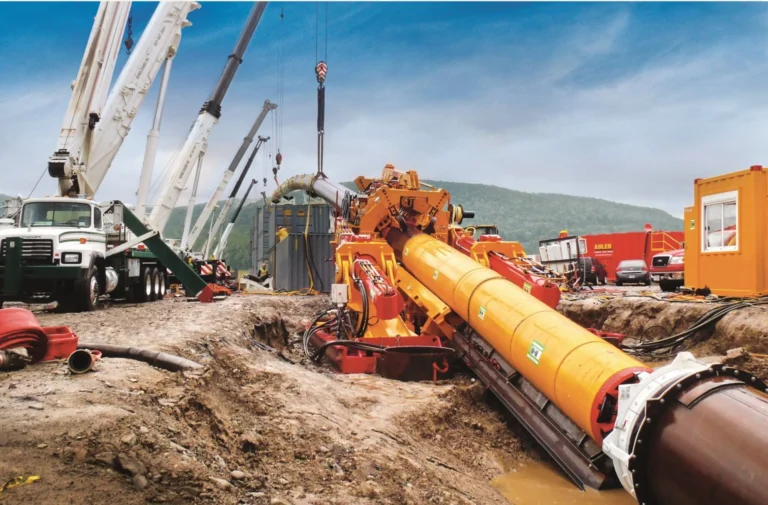
- Jacking System: Hydraulic jacks that push pipes forward as excavation progresses.
- Slurry System: Used to transport excavated material back to the surface.
- Guidance System: Laser-based navigation ensuring high accuracy.
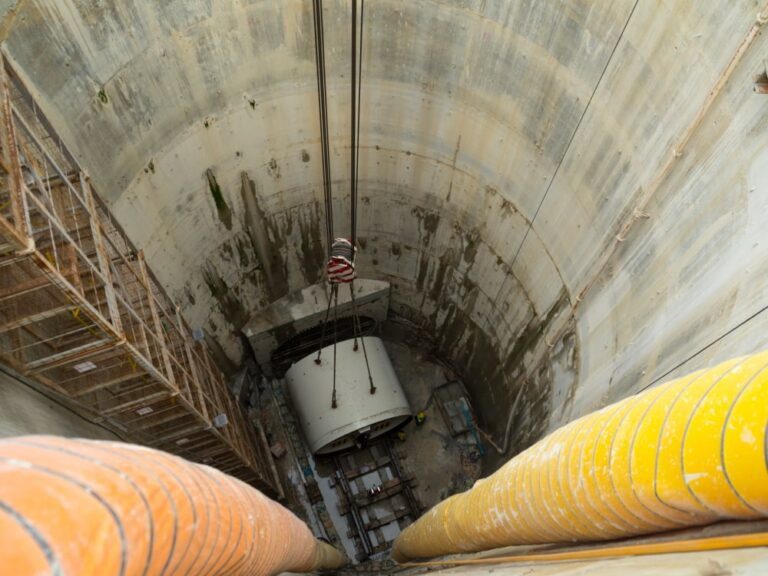
- Launch and Reception Shafts: Entry and exit points for the machine.
2.2 Process Overview
- A launch shaft is constructed at the starting point.
- The MTBM is lowered into the shaft.
- Excavation begins, and pipes are jacked forward behind the machine.
- Spoil is removed via slurry pipelines.
- The machine exits at the reception shaft.
2.3 Advantages
- Minimal surface disruption
- High precision (alignment accuracy within millimeters)
- Reduced environmental impact
- Safer working conditions
- Ability to work under roads, railways, and water bodies
3. Growth of Micro Tunneling in Saudi Arabia
Saudi Arabia’s infrastructure needs have created ideal conditions for trenchless technologies.
3.1 Urban Expansion
Cities such as Riyadh and Dammam have dense urban layouts where open excavation is impractical. Micro tunneling allows pipelines to be installed beneath:
- Highways
- Airports
- Industrial zones
- Residential areas
3.2 Water and Wastewater Projects
The Kingdom has invested heavily in:
- Sewage treatment plants
- Stormwater drainage systems
- Water transmission pipelines
Micro tunneling is widely used for:
- Gravity sewer lines
- Deep drainage systems
- Outfall pipelines
3.3 Oil & Gas and Industrial Infrastructure
In regions like the Eastern Province, pipelines often need to cross:
- Refineries
- Industrial complexes
- Restricted zones
Micro tunneling provides a non-intrusive solution.
4. Key Micro Tunneling Contractors in Saudi Arabia
Micro tunneling is a niche field requiring specialized expertise and equipment. Several companies dominate this sector:
4.1 Specialized Directions Contracting Company (SDCC)
- One of the leading trenchless contractors in Saudi Arabia
- Extensive experience in pipe jacking and micro tunneling
- Uses advanced German machinery (e.g., Herrenknecht MTBMs)
- Completed large-scale sewer and stormwater projects
4.2 Saudi Tunneling Company for Contracting (STCC)
- Part of a major regional construction group
- Expertise in:
- Micro tunneling
- Horizontal directional drilling (HDD)
- Involved in major infrastructure projects across the Kingdom
4.3 Thrustboring Technology Contracting Company (TBT)
- Focused on trenchless solutions
- Offers micro tunneling and thrust boring services
- Known for mid- to large-diameter installations
4.4 Other Players
- Regional and international trenchless specialists
- Joint ventures for mega projects
- Equipment suppliers offering technical partnerships
5. Overview of DTC Contracting
DTC Contracting is a well-established general contracting company headquartered in Al Khobar.
5.1 Core Capabilities
- Infrastructure construction
- Industrial projects
- Commercial and residential developments
- EPC (Engineering, Procurement, Construction) delivery
5.2 Project Scope
DTC typically handles:
- Site preparation
- Civil works
- Structural construction
- Utility networks
However, for specialized tasks such as micro tunneling, DTC relies on subcontractors.
6. Role of DTC in Micro Tunneling Projects
Although DTC is not a dedicated micro tunneling contractor, it plays a critical role in projects where trenchless technology is required.
6.1 Main Contractor Responsibilities
DTC typically acts as:
- Project manager
- Main contractor (EPC)
- Client interface
Responsibilities include:
- Project planning and scheduling
- Budget management
- Coordination of subcontractors
- Quality assurance
- Safety compliance
6.2 Subcontracting Model
In a typical micro tunneling project:
- DTC is awarded the main contract
- A specialist contractor (e.g., SDCC or STCC) is subcontracted
- The specialist performs the tunneling works
- DTC oversees integration with the overall project
6.3 Coordination Challenges
Micro tunneling requires precise coordination:
- Shaft construction must align with tunneling requirements
- Pipe supply must match installation pace
- Ground conditions must be assessed accurately
DTC ensures all components work together seamlessly.
7. Technical Challenges in Saudi Arabia
Micro tunneling in Saudi Arabia presents unique challenges:
7.1 Soil Conditions
- Sandy soils
- Mixed ground conditions
- High groundwater levels in coastal areas
These require:
- Slurry-based MTBMs
- Advanced soil stabilization techniques
7.2 High Temperatures
Extreme heat affects:
- Equipment performance
- Worker safety
- Material behavior
7.3 Urban Constraints
- Limited space for shafts
- Traffic management issues
- Existing underground utilities
8. Applications of Micro Tunneling in Saudi Projects
8.1 Sewer Networks
Deep gravity sewers require precise alignment and gradient control.
8.2 Stormwater Drainage
Flood mitigation systems rely heavily on underground pipelines.
8.3 Water Transmission
Pipelines installed under highways and urban areas.
8.4 Industrial Pipelines
Used in oil & gas and petrochemical facilities.
9. Equipment and Technology
Modern micro tunneling projects use advanced equipment:
9.1 MTBM Types
- Slurry MTBMs
- Earth Pressure Balance (EPB) machines
9.2 Guidance Systems
- Laser guidance
- Gyroscopic systems for long drives
9.3 Pipe Materials
- Reinforced concrete pipes (RCP)
- Steel pipes
- GRP pipes
10. Safety and Environmental Considerations
Micro tunneling is safer than traditional methods, but still requires:
- Strict safety protocols
- Monitoring of ground movement
- Environmental impact assessments
Advantages include:
- Reduced noise and dust
- Minimal disruption to communities
- Preservation of existing infrastructure
11. Economic Impact
Micro tunneling can be more expensive upfront than open-cut methods, but offers long-term savings:
- Reduced restoration costs
- Faster project completion in urban areas
- Lower social and environmental impact
For companies like DTC, using micro tunneling enhances project value and client satisfaction.
12. Future of Micro Tunneling in Saudi Arabia
The future looks promising due to:
12.1 Vision 2030
Major infrastructure initiatives will increase demand for:
- Smart cities
- Sustainable utilities
- Advanced construction methods
12.2 Mega Projects
Projects such as NEOM and other large developments will rely heavily on trenchless technologies.
12.3 Technological Advancements
- Automation and AI in tunneling
- Improved machine efficiency
- Real-time monitoring systems
13. Strategic Importance of Collaboration
The relationship between general contractors like DTC and specialized tunneling companies is essential.
13.1 Benefits of Collaboration
- Access to specialized expertise
- Risk sharing
- Improved project outcomes
13.2 Integrated Project Delivery
Successful projects require:
- Early involvement of tunneling specialists
- Accurate feasibility studies
- Strong communication between stakeholders
14. Case Scenario (Typical Project Structure)
A typical Saudi infrastructure project involving micro tunneling might look like this:
- Client: National Water Company or municipality
- Main Contractor: DTC Contracting
- Micro Tunneling Subcontractor: SDCC or STCC
- Consultant: Engineering design firm
- Design phase identifies need for trenchless method
- DTC wins EPC contract
- Specialized subcontractor is engaged
- Shafts are constructed by DTC
- Micro tunneling is executed by specialist
- Final integration and testing
Micro tunneling has become a cornerstone of modern infrastructure development in Saudi Arabia. Its ability to deliver high-precision underground pipelines with minimal disruption makes it indispensable in urban and industrial environments.While companies like DTC Contracting are not specialized in micro tunneling itself, they play a vital role in orchestrating complex infrastructure projects. By partnering with expert subcontractors such as Specialized Directions Contracting Company and Saudi Tunneling Company for Contracting, they ensure successful project delivery.