Horizontal Directional Drilling (HD Drilling) Works: Revolutionizing Underground Infrastructure
Horizontal Directional Drilling (HD Drilling), often referred to as Horizontal Directional Boring (HDD), has emerged as one of the most important trenchless technologies in modern infrastructure development. In a world where cities are becoming more congested and traditional excavation is increasingly costly, disruptive, and environmentally impactful, HD drilling offers a reliable alternative that minimizes surface disturbance while enabling the installation of underground utilities.
Today, companies like DTC General Contracting are leveraging HD drilling to execute complex projects across Saudi Arabia and the Middle East, delivering pipelines, conduits, and utility networks efficiently and with precision.
1. What Is HD Drilling?
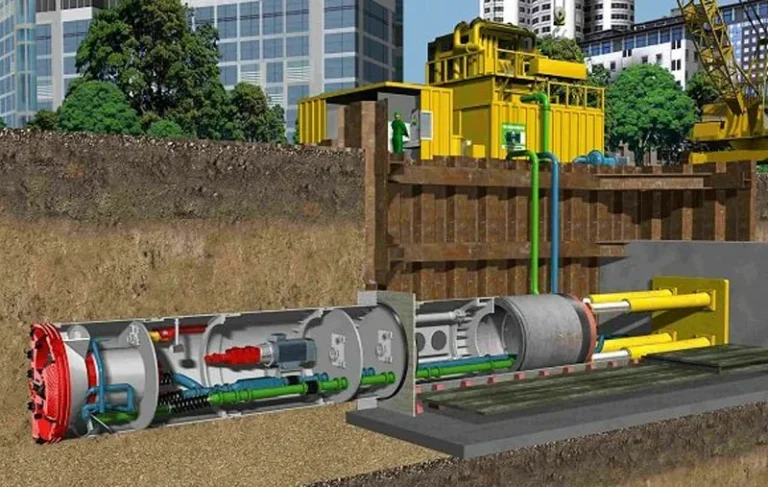
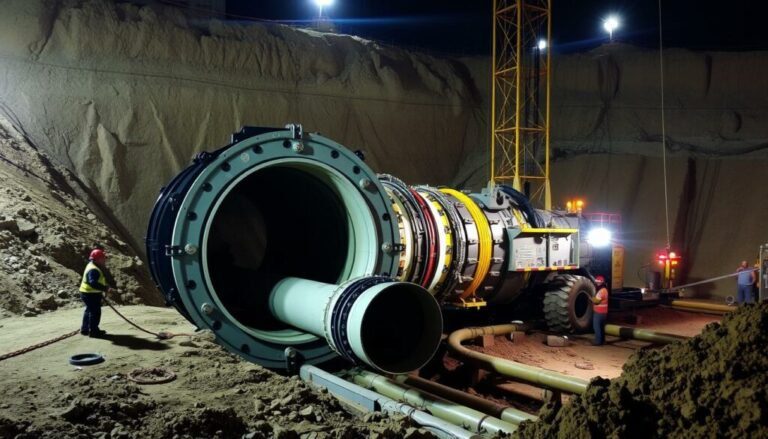
Horizontal Directional Drilling is a trenchless construction method that installs underground pipes, conduits, and cables along a predetermined bore path. Unlike conventional open‑cut techniques that require extensive trench excavation, HD drilling uses specialized drill rigs to create a borehole horizontally beneath the surface. The installation takes place with minimal surface disruption, preserving landscapes, roads, sensitive terrain, and existing infrastructure.
The process consists of three main phases:
- Pilot Hole Drilling – Establishing the initial bore path using a steerable drill head.
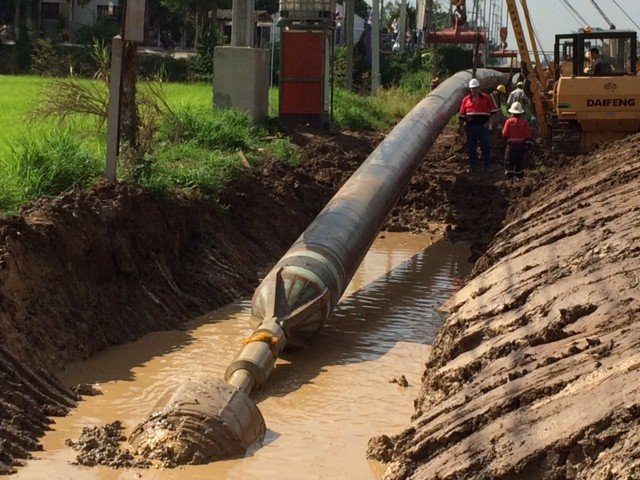
- Reaming/Enlargement – Widening the pilot hole to the required diameter.
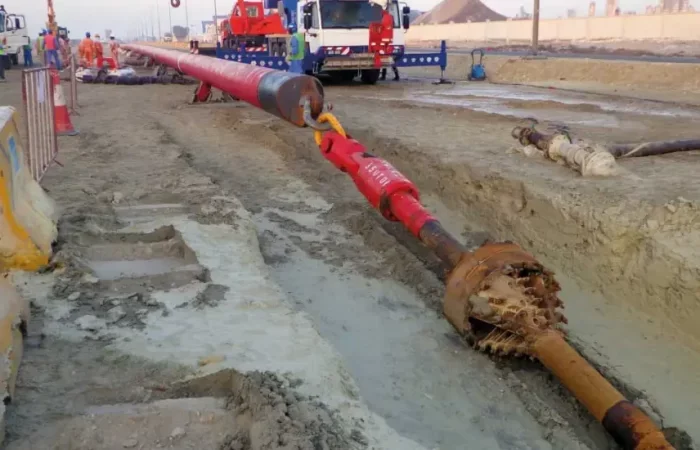
- Pullback – Pulling the product pipe or conduit back through the enlarged hole.
This method is widely used for installing gas pipelines, water mains, electrical and fiber optic conduits, sewer lines, and district heating systems.
2. Why HD Drilling Matters
HD drilling has quickly become a preferred method globally because it addresses many of the challenges associated with traditional excavation:
2.1 Minimal Surface Disruption
Traditional trench excavation involves extensive digging, which can disrupt traffic, businesses, agriculture, and public spaces. HD drilling eliminates large trenches, enabling underground installation with very little surface impact — especially important in urban environments and environmentally sensitive areas.
2.2 Cost‑Effectiveness
Although specialized equipment and skilled operators are required, HD drilling can be more cost‑effective over the project lifecycle. Reduced restoration costs, fewer delays due to traffic disruptions, and shorter project timelines contribute to overall savings.
2.3 Environmental Protection
HD drilling significantly reduces the environmental footprint of underground installations. By avoiding open trenches, it helps protect natural habitats, minimizes soil erosion, and limits disturbance to vegetation and wildlife.
2.4 Increased Safety
With less open excavation, the risks associated with trench collapses and surface accidents are greatly reduced. Workers are mainly positioned away from heavy traffic or unstable trench edges, improving on‑site safety.
3. When Is HD Drilling Used?
Horizontal Directional Drilling is used in a broad range of applications, including:
- Urban Utility Installation – Water, gas, and telecommunication pipelines under city streets.
- River and Waterway Crossings – Installing conduits beneath rivers, wetlands, and streams.
- Highway and Railway Crossings – Avoiding long detours and traffic disruptions.
- Energy Sector Projects – Oil, gas, and power transmission line installations.
- Renewable Energy Infrastructure – Geothermal loops and underground electrical grids.
DTC General Contracting has executed many HD drilling works in Saudi Arabia to support expanding infrastructure networks, particularly in regions like the Eastern Province where industrial, residential, and energy demands are rapidly growing.
4. Key Components of HD Drilling Works
4.1 Drill Rigs
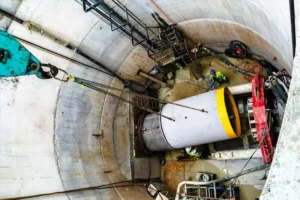
The drill rig is the heart of HD drilling operations. These heavy machines contain the motor, drill pipe handling systems, and steering technology needed to control the bore path accurately.
4.2 Tracking and Guidance Systems
Modern HD drilling employs electromagnetic and/or gyroscopic steering tools. These systems ensure that the drill bit follows the planned bore path and reaches the target exit point with precision.
4.3 Drilling Fluids
Drilling fluid (also called drilling mud) is essential to flushing out cuttings, stabilizing the borehole, cooling the drill head, and lubricating the drill string. HD drilling fluids are engineered to reduce friction and prevent borehole collapse.
4.4 Reamers and Backreaming Tools
These are used after the pilot hole to enlarge the borehole. Backreaming tools pull the product pipe into place after enlargement. Proper selection of reamers is critical for soil conditions — from soft sand to rock.
5. The HD Drilling Process Step‑by‑Step
5.1 Pre‑Construction Survey
Before any drilling begins, the site is surveyed using ground‑penetrating radar, utility maps, and GPS data to ensure there are no conflicts with existing infrastructure.
5.2 Pilot Hole Drilling
Using a steerable drill head, the drill operator creates the initial bore along the designed path. This phase requires high precision, especially when crossing beneath roads, rivers, or existing utilities.
5.3 Reaming/Enlargement
Once the pilot hole is completed, the bore is enlarged using reamers attached to the drill string. The size of the bore depends on the diameter of the product pipeline.
5.4 Pullback
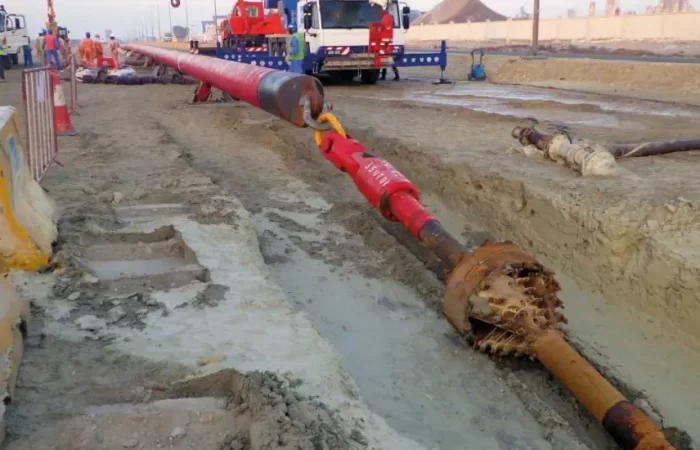
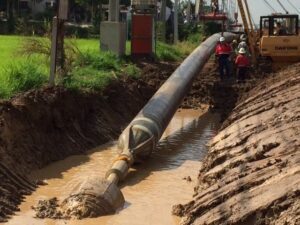
The final phase involves pulling the pipeline or conduit through the enlarged bore. Specialized connectors and tension monitoring systems ensure the pipe is installed safely without damage.
DTC General Contracting follows standardized HD drilling procedures aligned with international best practices, ensuring quality and durability in every project delivered.
6. Soil and Geological Challenges
HD drilling projects must carefully analyze soil and geological conditions because they influence drilling technique, equipment choice, and fluid formulation. Drillers encounter various terrains, including:
- Sandy soils
- Clay and silt
- Gravel and mixed soils
- Hard rock formations
Each soil type requires adjustments in drilling parameters — torque, drill bit type, fluid viscosity — and may affect project timelines and costs.
HD drilling service providers like DTC General Contracting deploy geological experts and advanced soil‑testing procedures to anticipate these challenges and plan accordingly.
7. Environmental and Regulatory Considerations
Governments and regulatory bodies often require environmental impact assessments before awarding HDD contracts. The benefits of HD drilling align well with environmental compliance because of reduced excavation and lower disturbance to ecosystems.
In Saudi Arabia, these assessments ensure:
- Protection of water resources
- Preservation of archaeological sites
- Minimal impact on protected flora and fauna
DTC’s project teams are familiar with local regulations and permit processes, which accelerates project approvals and ensures compliance from planning through execution.
8. Safety in HD Drilling Operations
Safety is a fundamental priority in HD drilling. The most common hazards include:
- Underground utility strikes
- Unexpected soil collapse
- High‑pressure drilling fluid releases
- Equipment handling risks
To mitigate these, contractors implement:
- Pre‑drill utility locating
- Personnel training and certification
- Rig‑specific safety protocols
- Emergency response planning
DTC integrates safety into all HD drilling workflows, often exceeding minimum regulatory standards to protect both workers and the public.
9. Economic and Community Impact
HD drilling not only benefits project owners by reducing cost and time, but also communities by preserving local environments and infrastructure. Projects that would otherwise require months of road closures can be completed with minimal disruption, helping neighborhoods, businesses, and daily commuters.
Moreover, HD drilling supports economic development by enabling utility expansion efficiently — essential for new residential developments, industrial zones, and energy infrastructure.
10. Future Trends in HD Drilling
The future of HD drilling continues to evolve with advancements in:
- Automation and robotics for drill guidance
- AI‑driven soil analysis
- Enhanced drilling fluids
- Real‑time monitoring systems
- Eco‑friendly drilling technologies
These innovations aim to increase precision, reduce costs, and minimize environmental impact even further. Companies such as DTC General Contracting are investing in technology and training to stay at the forefront of these advancements.
Horizontal Directional Drilling has transformed how modern infrastructure is built. By reducing environmental impact, enhancing safety, and minimizing social disruption, HD drillhttps://www.youtube.com/watch?v=iWMpZybhnUs&t=9sing has become the go‑to solution for underground installations — from urban utility networks to major energy projects.