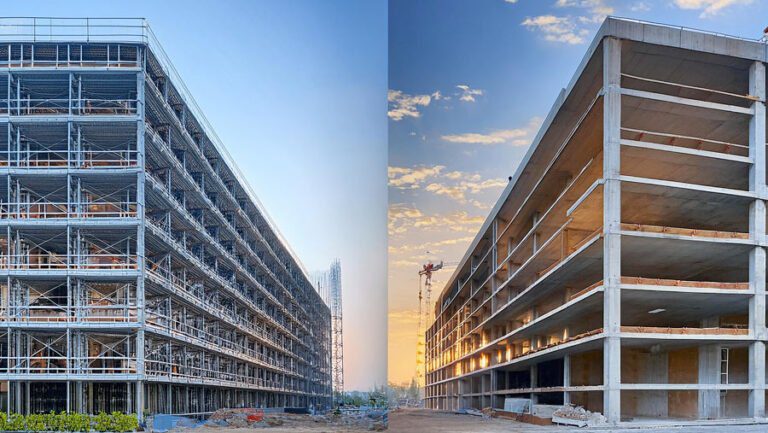
Ground Improvement for Industrial, Commercial, and Infrastructure Projects
Ground improvement is a crucial component of civil engineering that ensures the stability, durability, and safety of structures built on weak or problematic soils. As Saudi Arabia continues its ambitious urbanization and infrastructure development under Vision 2030, the demand for reliable ground improvement techniques has increased significantly. Mega cities like Riyadh, Jeddah, and upcoming projects like NEOM require industrial complexes, commercial hubs, and large infrastructure projects to be built on sites that often present challenging soil conditions.
Ground improvement involves modifying the physical and mechanical properties of soil to enhance its load-bearing capacity, reduce settlement, improve drainage, and mitigate geotechnical risks. The techniques used vary depending on the soil type, environmental conditions, project requirements, and economic considerations.
This essay examines the principles, methods, applications, advantages, and challenges of ground improvement in industrial, commercial, and infrastructure projects in Saudi Arabia.
2. Importance of Ground Improvement
Ground improvement is essential for several reasons:
- Load-Bearing Capacity: Weak soils such as loose sands, silts, or clay may fail under heavy loads from industrial buildings, warehouses, or bridges. Ground improvement increases the bearing capacity and prevents structural failure.
- Settlement Control: Differential settlement can lead to cracks and instability in buildings and infrastructure. Ground treatment minimizes settlement risks.
- Water Management: In coastal cities like Jeddah, high groundwater levels can weaken soil. Methods like drainage improvement and soil stabilization help manage water-related issues.
- Environmental and Economic Benefits: Improving the soil in situ often reduces the need for expensive excavation, replacement, and import of fill materials.
- Supporting Mega Projects: Industrial zones, commercial complexes, and infrastructure networks such as highways, railways, and airports require safe and durable foundations. Ground improvement ensures that these projects remain structurally sound over time.
3. Common Soil Challenges in Saudi Arabia
Saudi Arabia presents diverse soil conditions that pose challenges for construction:
- Sandy soils in desert regions that are prone to shifting and low cohesion.
- Silt and clay deposits near wadis and riverbeds that are compressible and may cause excessive settlement.
- Rocky terrains in mountainous regions like Asir that are hard but may be uneven or fractured.
- High groundwater levels in coastal regions like the Red Sea and Eastern Province that require dewatering or soil stabilization.
- Salt-affected soils in coastal or reclaimed areas that can deteriorate concrete and steel structures if not treated.
Ground improvement methods must be adapted to address these local soil challenges effectively.
4. Ground Improvement Techniques
Ground improvement techniques are broadly classified into mechanical, chemical, and hydraulic methods.
4.1 Mechanical Methods
Compaction:
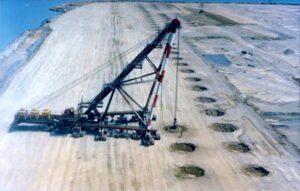
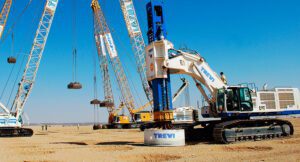
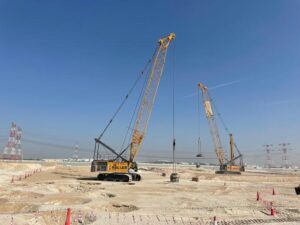
- Techniques include dynamic compaction, vibro-compaction, and rolling.
- Increases soil density and reduces voids, improving strength and reducing settlement.
- Commonly used for industrial yards, parking lots, and foundation pads.
Reinforcement:
- Geosynthetics (geogrids, geotextiles) and stone columns reinforce weak soils.
- Stone columns improve load distribution under warehouses and roadways.
- Geogrids reduce lateral spreading in embankments and commercial developments.
4.2 Chemical Methods
Soil Stabilization:
- Involves mixing soil with cement, lime, fly ash, or other additives to improve strength and reduce compressibility.
- Suitable for clayey or silty soils in commercial building sites and road foundations.
Grouting:
- Injecting cement, chemical, or polyurethane grout into soils to fill voids, increase strength, and reduce permeability.
- Effective for infrastructure tunnels, foundations, and industrial tanks.
4.3 Hydraulic Methods
Dewatering:
- Reduces groundwater levels temporarily or permanently to stabilize soils during construction.
- Vital in coastal projects, basement excavation, and bridge foundations.
Preloading and Vertical Drains:
- Sand or prefabricated vertical drains accelerate consolidation in soft clay areas.
- Reduces long-term settlement under commercial complexes and embankments.
4.4 Innovative Techniques
Deep Soil Mixing (DSM):
- Combines mechanical and chemical methods to create soil-cement columns in situ.
- Ideal for high-rise buildings, industrial foundations, and highway embankments.
Jet Grouting:
- High-pressure cement or chemical grout is injected into the soil to form solid columns.
- Suitable for complex urban projects where minimal disturbance is required.
Vibro Replacement / Stone Columns:
- Reinforces soft soils with compacted stone columns.
- Frequently used in industrial parks and port facilities to support heavy machinery and storage areas.
5. Applications in Industrial Projects
Industrial facilities often involve heavy equipment, storage tanks, and high live loads. Ground improvement is crucial for:
- Factory foundations to prevent uneven settlement.
- Heavy machinery pads requiring uniform support.
- Warehouses to handle concentrated loads from racking systems.
- Industrial roads and loading areas where soil compaction is necessary.
For example, stone columns or deep soil mixing can provide stable foundations for factories in desert regions with loose sandy soils. Cement stabilization is used for silty soils to create a load-bearing layer.
6. Applications in Commercial Projects
Commercial projects such as malls, office complexes, hotels, and residential high-rises demand precise ground improvement:
- High-rise buildings: Require deep foundations supported by reinforced soils or DSM columns.
- Basements: Dewatering and soil stabilization prevent water infiltration.
- Parking structures: Compacted and stabilized soils prevent settlement and cracking.
- Landscaped areas: Proper soil improvement ensures green spaces remain stable and prevents erosion.
In urban areas like Riyadh and Jeddah, ground improvement helps construct large commercial developments without disturbing adjacent structures or roads.
7. Applications in Infrastructure Projects
Infrastructure projects, including highways, railways, bridges, airports, and ports, rely heavily on ground improvement:
- Road embankments: Vibro-compaction and stone columns prevent lateral spreading.
- Highways: Soil stabilization ensures longevity and reduces maintenance costs.
- Airport runways: Require uniform and high bearing capacity soils to handle aircraft loads.
- Railway tracks: Reinforced subgrade reduces differential settlement.
- Bridge abutments and foundations: Grouting and DSM ensure structural stability.
Saudi Arabia’s Vision 2030 infrastructure projects, including metro lines in Riyadh and Jeddah and NEOM’s transportation networks, depend on advanced ground improvement techniques to ensure safety and durability.
8. Advantages of Ground Improvement
Ground improvement offers several advantages for industrial, commercial, and infrastructure projects:
- Enhanced Load-Bearing Capacity: Supports heavy structures and prevents structural failure.
- Settlement Reduction: Minimizes differential settlement, ensuring long-term stability.
- Cost Savings: Reduces the need for deep foundations or soil replacement.
- Sustainability: Utilizes in situ soil, reduces material transportation, and minimizes environmental impact.
- Versatility: Applicable to various soil types and environmental conditions.
- Speed of Construction: Certain techniques, such as preloading and vertical drains, accelerate project timelines.
9. Challenges and Considerations
Despite its benefits, ground improvement poses challenges:
- Soil Variability: Heterogeneous soils require detailed geotechnical investigation.
- High Initial Costs: Techniques like jet grouting and DSM can be expensive.
- Technical Expertise: Skilled engineers and technicians are necessary to design and implement solutions.
- Environmental Concerns: Chemical stabilizers must be carefully managed to avoid contamination.
- Monitoring Requirements: Continuous monitoring is essential for large infrastructure projects to ensure soil performance.
In Saudi Arabia, careful planning is necessary to adapt methods to sandy deserts, coastal saline soils, and rocky terrains.
10. Case Studies in Saudi Arabia
- Riyadh Metro Project: Utilized deep soil mixing and jet grouting to stabilize weak clay and sandy soils for underground tunnels and stations.
- Industrial Zones in Dammam and Jubail: Stone columns and soil compaction were implemented to support heavy machinery and storage yards.
- NEOM Mega City: Preloading, vertical drains, and chemical stabilization were employed to prepare reclaimed and soft soils for commercial and infrastructure projects.
These projects demonstrate the importance of selecting appropriate ground improvement techniques tailored to local soil and project requirements.
11. Future Trends
Future developments in ground improvement include:
- Sustainable and Green Techniques: Using recycled materials and eco-friendly stabilizers.
- Automation and Smart Monitoring: Sensors and AI systems to track soil performance in real-time.
- Integration with Smart Cities: Coordinating ground improvement with utility and infrastructure planning.
- Advanced Materials: High-strength geopolymers and nanomaterials for soil stabilization.
Saudi Arabia is investing in research and development to enhance ground improvement technologies to meet Vision 2030 goals.
Ground improvement is a critical element in ensuring the stability, safety, and sustainability of industrial, commercial, and infrastructure projects in Saudi Arabia. With rapid urbanization, mega projects, and challenging soil conditions, techniques like mechanical compaction, chemical stabilization, grouting, deep soil mixing, and vibro-replacement have become indispensable.
The careful selection and implementation of ground improvement techniques allow engineers to construct heavy-duty foundations, mitigate settlement, manage groundwater, and enhance project durability. As Saudi Arabia advances toward Vision 2030, ground improvement will continue to play a pivotal role in shaping resilient industrial zones, commercial hubs, and modern infrastructure networks.