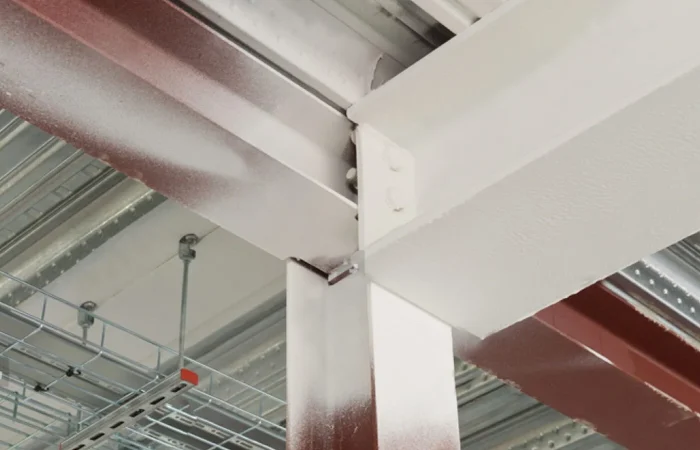
Fireproof Paint for Steel Buildings – DTC General Contracting
Steel is the backbone of modern construction. Its strength, versatility, and durability make it the preferred material for industrial facilities, high-rise buildings, commercial complexes, and warehouses. However, steel has one critical vulnerability — fire.
While steel does not burn, it loses structural strength when exposed to high temperatures. Without proper protection, steel components such as beams, columns, and trusses can weaken and potentially fail during a fire, risking both lives and property.
At DTC General Contracting, we specialize in fireproofing steel structures using fireproof paint, also known as intumescent coatings, to ensure safety, compliance, and durability in every project. This article provides a complete overview of fireproof paint, its applications, types, benefits, standards, and why DTC is a trusted partner in Saudi Arabia.
1. What Is Fireproof Paint?
Fireproof paint, or intumescent paint, is a specially formulated coating that protects steel structures from the effects of fire. Unlike regular paint, intumescent coatings react to heat by expanding and forming an insulating char layer. This layer protects the steel underneath from reaching critical temperatures that can compromise structural integrity.
Fireproof paint is a part of passive fire protection (PFP). Passive systems, unlike active fire suppression systems such as sprinklers or alarms, work automatically during a fire without the need for activation. The main goal is to maintain the steel’s load-bearing capacity for a specified period, typically measured in hours.
2. Why Fireproof Paint Is Essential for Steel Buildings
Steel is inherently strong and durable, but it becomes dangerously weak under high temperatures:
-
At 400°C, steel begins to lose strength.
-
At 550°C, it may lose around 50% of its load-bearing capacity.
-
Above 700°C, steel can lose more than 80% of its strength, risking structural collapse.
In a building fire, temperatures can exceed 1,000°C in minutes. Fireproof paint delays this heat transfer, giving occupants time to evacuate and firefighters the time to control the blaze.
Fireproof paint is particularly essential for:
-
High-rise commercial and residential buildings
-
Industrial plants and factories
-
Warehouses and logistics centers
-
Petrochemical and oil & gas facilities
-
Airports and transportation hubs
In Saudi Arabia, where industrial and commercial expansion is rapid, adhering to Saudi Building Code (SBC) and Civil Defense requirements is mandatory. Fireproof paint ensures compliance while protecting human life and property.
3. How Fireproof Paint Works
Fireproof paint works through a chemical reaction when exposed to high heat. The main mechanism involves:
-
Expansion – The paint layer expands significantly (up to 50 times its original thickness).
-
Insulation – The char layer formed acts as a thermal barrier between fire and steel.
-
Delay of Temperature Rise – By slowing the temperature increase, it extends the time steel can maintain structural integrity.
Depending on the formulation, intumescent paints can provide fire resistance ranging from 30 minutes to 4 hours, which is critical for ensuring life safety in high-risk buildings.
4. Types of Fireproof Paint
There are several types of fireproof paint suitable for different projects:
4.1 Water-Based Intumescent Paint
-
Composition: Water as solvent, with fire-retardant chemicals.
-
Advantages: Low VOC, environmentally friendly, easy to apply.
-
Applications: Offices, commercial towers, residential buildings.
4.2 Solvent-Based Intumescent Paint
-
Composition: Organic solvents with reactive compounds.
-
Advantages: Thicker film, faster drying, excellent adhesion.
-
Applications: Industrial plants, warehouses, exposed steel structures.
4.3 Epoxy Intumescent Paint
-
Composition: Epoxy resin-based with fire retardant additives.
-
Advantages: High durability, chemical resistance, suitable for harsh environments.
-
Applications: Petrochemical plants, oil & gas facilities, coastal industrial sites.
4.4 Thin-Film vs Thick-Film Coatings
-
Thin-film intumescent coatings: Aesthetic finish, smooth surface, often used in exposed steel applications.
-
Thick-film coatings: Economical, faster application, suitable for concealed structural steel in ceilings or industrial buildings.
At DTC General Contracting, we select the type based on project requirements, environmental conditions, and fire rating specifications.
5. Fire Ratings and Compliance
Fireproof paint is applied to achieve a specified fire rating, which indicates how long a steel member can resist fire. Common ratings include:
-
1-hour fire rating – Common in small commercial buildings
-
2-hour fire rating – Used for industrial facilities and mid-rise buildings
-
3-hour fire rating – Large warehouses, high-rise structures
-
4-hour fire rating – Petrochemical plants, oil & gas facilities
Compliance with international and Saudi standards ensures safety and legal approval:
-
Saudi Civil Defense Regulations
-
Saudi Building Code (SBC)
-
ASTM E119 / E84 – Fire resistance testing
-
UL 1709 – Hydrocarbon fire protection
-
NFPA 703 & 251 – Fireproofing standards
DTC General Contracting ensures that fireproof paint thickness and application methods are engineered to meet or exceed these standards.
6. Application Process
Proper application of fireproof paint is critical to its effectiveness. At DTC General Contracting, we follow a strict process:
Step 1: Surface Preparation
-
Clean steel from rust, dust, and grease
-
Apply primer if required for adhesion
-
Ensure proper ambient conditions for application
Step 2: Material Mixing
-
Follow manufacturer specifications for consistency
-
Ensure proper ratio of solvents, binders, and fire retardants
Step 3: Application
-
Spray, brush, or roller depending on project size and accessibility
-
Apply in controlled layers to reach specified thickness
-
Monitor environmental conditions (temperature, humidity)
Step 4: Curing
-
Allow sufficient drying/curing time as per manufacturer guidelines
-
Avoid physical damage during curing
Step 5: Quality Assurance
-
Measure dry film thickness
-
Conduct adhesion and density tests
-
Document compliance for Civil Defense or client submission
7. Advantages of Fireproof Paint
-
Life Safety: Delays steel collapse, providing evacuation time
-
Aesthetics: Smooth finish for exposed steel without bulky cladding
-
Lightweight: Minimal impact on structural load
-
Cost-Effective: Reduces labor and material compared to cementitious fireproofing
-
Versatile: Suitable for industrial, commercial, and residential projects
-
Compliance: Meets local and international fire codes
8. Industries Using Fireproof Paint
DTC General Contracting provides fireproof paint services across multiple industries:
-
Industrial Plants: Manufacturing facilities, chemical plants, warehouses
-
Commercial Buildings: Office towers, malls, airports
-
Residential Buildings: High-rise apartments, condos
-
Oil & Gas Facilities: Refineries, petrochemical plants
-
Logistics & Warehouses: Large steel structures requiring long fire rating
Each industry has unique fire resistance requirements, which DTC ensures are met through precise engineering and application.
9. Fireproof Paint vs Other Fireproofing Methods
| Feature | Fireproof Paint | Cementitious Fireproofing | Fireproof Boards |
|---|---|---|---|
| Thickness | Thin | Thick | Variable |
| Finish | Smooth, aesthetic | Rough | Smooth or cladded |
| Weight | Light | Heavy | Medium |
| Application | Spray/Brush | Spray | Bolt-on |
| Cost | Moderate | Low-Medium | High |
| Use | Exposed & concealed steel | Concealed steel | Exposed steel with impact protection |
Fireproof paint is ideal where appearance and space are important, while cementitious systems are best for industrial, concealed steel.
10. Maintenance and Inspection
Even after professional application, periodic inspection ensures longevity:
-
Check for peeling, cracking, or damage
-
Ensure no moisture intrusion
-
Repair damaged areas immediately
-
Re-measure thickness if exposed to harsh environments
DTC General Contracting offers inspection and maintenance programs to ensure fireproof paint remains fully functional throughout the building lifecycle.
11. Cost Considerations
The cost of fireproof paint depends on:
-
Fire rating required
-
Surface area to be coated
-
Type of intumescent paint (water-based, solvent-based, epoxy)
-
Accessibility and height of steel members
-
Environmental conditions (humidity, coastal exposure)
While the initial cost may be higher than basic coatings, fireproof paint prevents catastrophic losses, avoids legal penalties, and reduces the need for bulky cladding.
12. Sustainability of Fireproof Paint
Modern intumescent paints:
-
Low VOC content
-
Environmentally friendly
-
Long-lasting performance
-
Reduced environmental impact compared to heavy cementitious systems
DTC prioritizes sustainable materials and eco-friendly coatings in all projects.
13. Mega Projects and Fireproof Paint in Saudi Arabia
Saudi Arabia’s Vision 2030 initiatives have increased demand for fireproofing steel structures in projects such as:
-
NEOM – Smart city development
-
Red Sea Project – Luxury tourism and infrastructure
-
Qiddiya – Entertainment city
-
Diriyah Gate – Cultural and commercial hub
-
Industrial Zones – Jubail, Yanbu, Dammam
DTC General Contracting is experienced in large-scale, high-risk projects, delivering fireproof paint solutions that meet stringent specifications.
14. Why Choose DTC General Contracting
-
Experienced technical team specializing in steel fireproofing
-
Certified applicators with training in international standards
-
Advanced equipment and high-quality materials
-
Full compliance with Civil Defense, SBC, and UL/ASTM standards
-
Quality assurance and documentation
-
Timely project completion and competitive pricing
We ensure steel structures remain safe, compliant, and aesthetically pleasing, combining technical excellence with customer-focused service.
Conclusion
At DTC General Contracting, we provide tailored solutions that integrate engineering precision, certified materials, and expert application to ensure compliance with Saudi and international safety standards.
From high-rise towers to industrial plants, warehouses, and petrochemical facilities, DTC General Contracting is your trusted partner for fireproof paint and steel fire protection services in Saudi Arabia.