Erection Constraints and Anticipated Challenges for Steel Structure Installation
Steel structure erection is a critical phase in the lifecycle of construction projects, particularly in large-scale industrial, commercial, and infrastructure developments. Despite its many advantages—speed, strength, modularity—erecting steel structures comes with its own set of technical, logistical, and environmental constraints. Understanding these challenges is essential for effective planning, cost control, and safety assurance.
1. Site Access and Space Limitations
One of the most common constraints in steel erection is restricted site access. Urban developments or expansion projects within active industrial zones often have limited maneuvering space for cranes, trucks, and forklifts. In such cases, just-in-time delivery and pre-planned erection sequences become essential to avoid congestion, delays, and unsafe conditions.
Additionally, proximity to surrounding buildings, power lines, or infrastructure may prevent the use of large lifting equipment or require specific erection techniques, such as tandem lifting or segmental installation.
2. Foundation Readiness and Alignment Issues
Before any steel member is erected, the foundation and anchor bolts must be correctly positioned and cured. Delays in civil works or inaccuracies in foundation layout can lead to misalignment, requiring rework or shim adjustments. This can significantly impact the erection schedule and increase labor and material costs.
Moreover, improper leveling or out-of-tolerance base plates can affect column stability, especially during the early stages of erection when temporary bracing is critical.
3. Weather Conditions and Wind Loads
Weather plays a substantial role in steel erection. High winds pose a serious hazard, especially when lifting and placing large members like rafters, trusses, or panels. Erection teams must follow wind limit guidelines for crane operation and stop work when conditions are unsafe.
Heavy rain or extreme heat, common in regions like the Middle East, can delay lifting operations or affect the safety of personnel working at height. Such conditions necessitate flexible scheduling, protective equipment, and contingency plans.
4. Coordination and Interface with Other Trades
Steel erection does not occur in isolation. It must be carefully coordinated with other trades such as mechanical, electrical, and façade contractors. Conflicts in timing or scope can lead to access restrictions or rework if embed plates, sleeves, or openings are not correctly placed or aligned.
Poor coordination also affects sequencing. For example, prematurely installing cladding or MEP systems can restrict crane movement or access to bolted connections.
5. Safety and Working at Heights
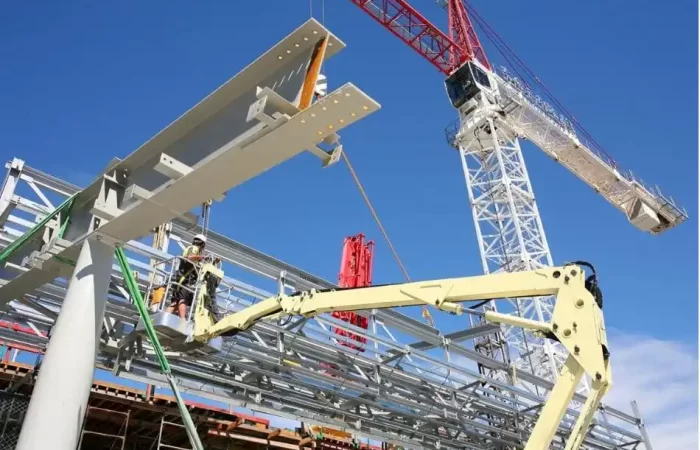
Steel erection involves a high degree of risk due to working at heights, suspended loads, and heavy equipment. Inadequate fall protection systems, improper use of harnesses, or absence of safety nets can result in serious accidents. Ensuring that all crews are trained, properly equipped, and supervised is both a legal and operational requirement.
Rigorous method statements, toolbox talks, and safety audits are needed to mitigate these risks. Erectors must be familiar with OSHA standards or equivalent local safety codes.
6. Logistics and Material Handling
Transporting steel components to the site and storing them without damage requires planning. Long-span members may need special trailers, police escorts, or offloading zones. Once on-site, components must be stored on level ground and supported to prevent warping or contamination.
Late deliveries or out-of-sequence supply of members can delay installation or disrupt the erection sequence, especially if cranes are hired on a time-limited basis.
Conclusion
Erecting steel structures is a complex task requiring careful management of constraints and proactive mitigation of anticipated challenges. From site access to safety and sequencing, success lies in thorough pre-erection planning, clear communication among stakeholders, and a strong commitment to quality and safety standards. By addressing these challenges early, project teams can ensure timely, efficient, and safe steel structure completion.