Dynamic Compaction for Earthwork and the Role of DTC General Contracting
In modern civil engineering and construction, the quality and stability of the ground are fundamental to the success of any project. Whether constructing highways, industrial facilities, ports, or large-scale urban developments, engineers must ensure that the underlying soil can safely support structural loads. In many regions, including parts of Saudi Arabia and the Gulf, natural soils are often loose, heterogeneous, or reclaimed, making them unsuitable for direct construction without improvement.
One of the most widely used and cost-effective ground improvement methods is dynamic compaction (DC). This technique has proven particularly valuable in large-scale earthwork projects due to its simplicity, efficiency, and ability to treat significant depths of weak soil. Contracting companies such as DTC General Contracting are often involved in implementing such methods as part of comprehensive site development and infrastructure projects.
This article provides a detailed overview of dynamic compaction, including its principles, equipment, design considerations, execution procedures, advantages, limitations, and its application in real-world construction projects.
1. Fundamentals of Dynamic Compaction
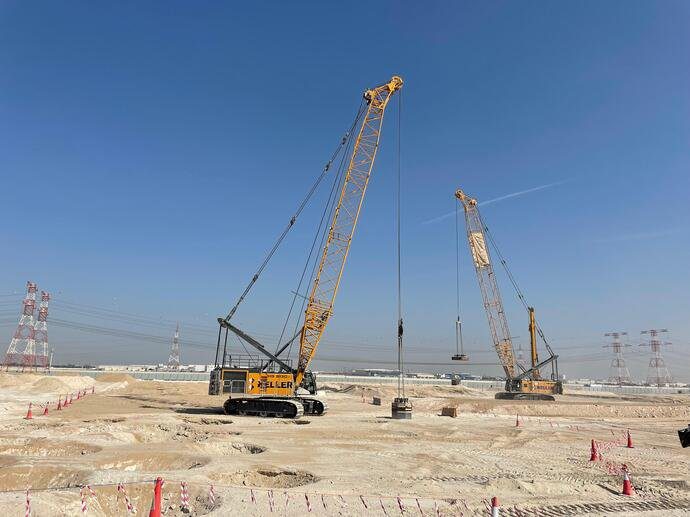
Dynamic compaction is a ground improvement technique that involves repeatedly dropping a heavy weight (tamper) from a predetermined height onto the soil surface. The energy generated by the impact is transmitted into the ground, causing densification of loose or compressible soils.
1.1 Basic Principle
The fundamental concept behind dynamic compaction is the application of high-energy impacts to rearrange soil particles into a denser configuration. When the weight hits the ground:
- Stress waves propagate downward and outward.
- Soil particles are forced closer together.
- Air and water voids are reduced.
- Shear strength and stiffness increase.
The improvement depth depends primarily on the energy applied, which is calculated as:
Energy (E) = Weight (W) × Drop Height (H)
Higher energy levels result in deeper soil improvement.
2. Types of Soils Suitable for Dynamic Compaction
Dynamic compaction is most effective in certain soil types and less effective in others.
2.1 Suitable Soils
- Loose granular soils (sand and gravel)
- Reclaimed land
- Hydraulic fills
- Collapsible soils
- Waste fills and uncontrolled fills
2.2 Less Suitable Soils
- Saturated fine-grained soils (clays and silts)
- Organic soils (peat)
- Highly plastic cohesive soils
In cohesive soils, pore water pressure builds up during impact, reducing effectiveness unless sufficient drainage time is allowed.
3. Equipment Used in Dynamic Compaction
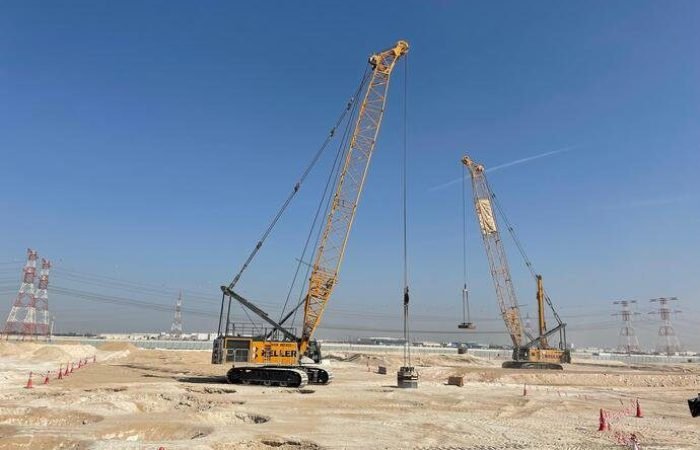
Dynamic compaction requires specialized heavy equipment:
3.1 Crane
- Typically crawler cranes
- Capable of lifting 10–30 ton weights
- Boom height sufficient for required drop height
3.2 Tamper (Weight)
- Steel or concrete mass
- Circular or polygonal base
- Diameter typically 2–4 meters
3.3 Instrumentation
- Settlement plates
- Piezometers
- Standard Penetration Test (SPT) equipment
- Cone Penetration Test (CPT) devices
Companies like DTC General Contracting typically operate and manage such equipment during large earthwork operations.
4. Design Considerations
Dynamic compaction design is a critical step that determines the success of the treatment.
4.1 Key Parameters
- Drop Weight (W)
Typically ranges from 5 to 30 tons. - Drop Height (H)
Usually between 10 and 30 meters. - Grid Spacing
The spacing between impact points (e.g., 3m × 3m, 5m × 5m). - Number of Drops (Blows)
Number of times the weight is dropped at each point. - Number of Passes
Multiple phases of compaction are often required:- Primary pass (deep compaction)
- Secondary pass (intermediate layers)
- Ironing pass (surface leveling)
4.2 Depth of Improvement
An empirical formula often used:
D ≈ n √(W × H)
Where:
- D = depth of improvement
- n = coefficient depending on soil type
Typical improvement depth ranges from 5 to 15 meters, but can reach up to 20 meters in favorable conditions.
5. Execution Procedure
5.1 Site Preparation
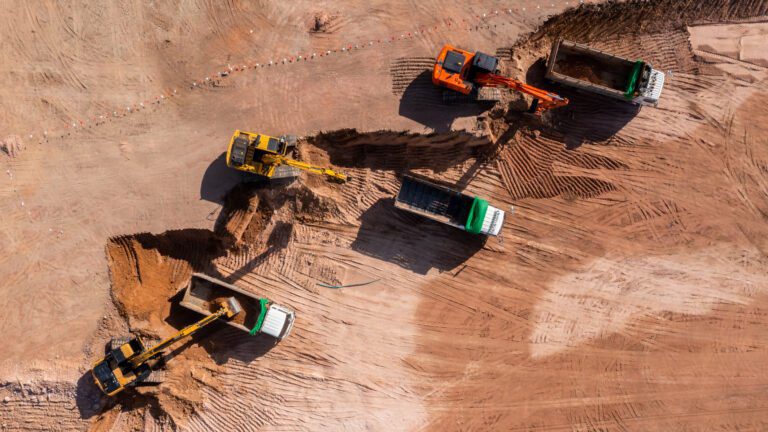
- Clearing and grading the site
- Establishing grid points
- Marking impact locations
5.2 Trial Section
A test area is compacted first to determine optimal parameters:
- Energy level
- Grid spacing
- Number of drops
5.3 Main Compaction Works
Phase 1: Primary Compaction
- High-energy impacts
- Widely spaced grid
- Targets deeper soil layers
Phase 2: Secondary Compaction
- Reduced energy
- Closer spacing
- Improves intermediate layers
Phase 3: Ironing Pass
- Low energy
- Surface densification
- Smooths the ground
5.4 Monitoring
- Settlement measurements
- Pore water pressure monitoring
- Field density tests
5.5 Quality Control
- SPT or CPT testing
- Plate load tests
- Verification of design requirements
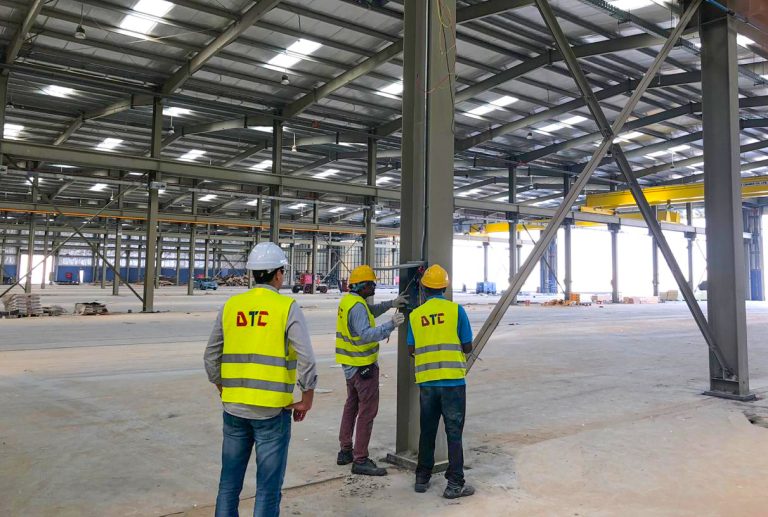
Contractors such as DTC General Contracting typically follow strict quality assurance procedures to ensure compliance with project specifications.
6. Advantages of Dynamic Compaction
Dynamic compaction offers several benefits:
6.1 Cost-Effectiveness
Compared to deep foundations or piling, dynamic compaction is relatively inexpensive.
6.2 Depth of Treatment
Capable of improving soil at considerable depths.
6.3 Simplicity
- Straightforward technique
- Requires relatively simple equipment
6.4 Versatility
Applicable to a wide range of soil conditions and project types.
6.5 Speed
Large areas can be treated quickly.
7. Limitations and Challenges
Despite its advantages, dynamic compaction has some limitations:
7.1 Vibrations
- Can affect nearby structures
- Requires monitoring in urban areas
7.2 Noise
- High noise levels due to repeated impacts
7.3 Unsuitability for Certain Soils
- Ineffective in soft clays without drainage
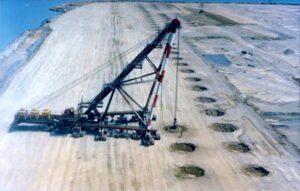
7.4 Surface Cratering
- Requires filling and re-leveling
7.5 Groundwater Issues
- High water tables may reduce effectiveness
8. Applications of Dynamic Compaction
Dynamic compaction is widely used in various construction sectors:
8.1 Land Reclamation
Improving reclaimed land for ports and coastal developments.
8.2 Industrial Facilities
Providing stable ground for heavy machinery and storage tanks.
8.3 Infrastructure Projects
- Roads and highways
- Railways
- Airports
8.4 Oil and Gas Projects
Common in regions like Saudi Arabia for:
- Pipeline corridors
- Processing plants
- Storage facilities
8.5 Urban Development
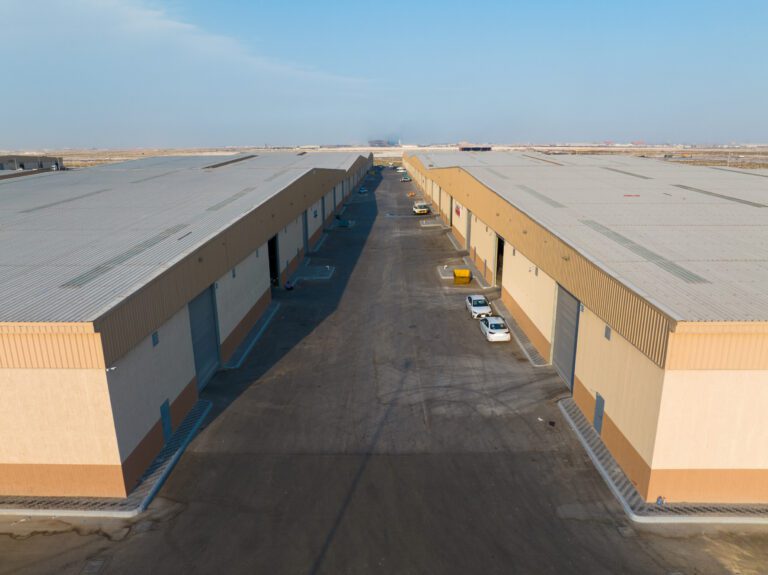
Preparing land for residential and commercial buildings.
Companies like DTC General Contracting often participate in these types of projects, particularly in large-scale developments.
9. Comparison with Other Ground Improvement Methods
9.1 Dynamic Compaction vs Vibro Compaction
- DC: Uses impact energy
- Vibro: Uses vibration probes
- Vibro is more effective in saturated sands
9.2 Dynamic Compaction vs Piling
- DC: Improves existing soil
- Piling: Transfers load to deeper layers
- DC is cheaper but less precise
9.3 Dynamic Compaction vs Soil Replacement
- DC avoids excavation
- Soil replacement is more expensive and time-consuming
10. Safety Considerations
Safety is critical during dynamic compaction operations:
10.1 Equipment Safety
- Regular inspection of cranes and cables
- Proper rigging of tampers
10.2 Site Safety
- Establish exclusion zones
- Control access to impact areas
10.3 Environmental Safety
- Dust control measures
- Noise mitigation strategies
10.4 Monitoring Adjacent Structures
- Install vibration sensors
- Ensure safe vibration limits
11. Environmental Impact
Dynamic compaction has both positive and negative environmental effects:
Positive
- Reduces need for imported materials
- Improves use of existing land
Negative
- Noise pollution
- Ground vibrations
- Dust generation
Mitigation measures include:
- Water spraying for dust
- Scheduling work during appropriate hours
- Monitoring environmental parameters
12. Role of Contractors in Dynamic Compaction Projects
Contractors play a central role in executing dynamic compaction projects. A company like DTC General Contracting would typically be responsible for:
12.1 Project Planning
- Reviewing geotechnical reports
- Selecting appropriate techniques
12.2 Equipment Management
- Mobilizing cranes and tampers
- Maintaining equipment
12.3 Execution
- Performing compaction works
- Ensuring adherence to design parameters
12.4 Quality Assurance
- Conducting field tests
- Documenting results
12.5 Coordination
- Working with consultants and clients
- Managing project timelines
13. Case Study Overview (Generalized)
In a typical project scenario:
- A site with loose sandy fill is identified
- Geotechnical investigation reveals low bearing capacity
- Dynamic compaction is selected
Execution steps:
- Trial compaction performed
- Parameters optimized
- Full-scale compaction executed
- Testing confirms improved soil strength
Result:
- Increased bearing capacity
- Reduced settlement
- Ready for construction
Such workflows are standard in projects handled by experienced contractors like DTC General Contracting.
14. Future Trends in Dynamic Compaction
The field of ground improvement continues to evolve:
14.1 Advanced Monitoring
- Real-time sensors
- Automated data collection
14.2 Numerical Modeling
- Improved prediction of soil behavior
14.3 Hybrid Techniques
- Combining dynamic compaction with other methods
14.4 Sustainability Focus
- Reducing environmental impact
- Optimizing energy usage
Dynamic compaction remains one of the most effective and economical methods for improving weak or loose soils in large-scale earthwork projects. Its ability to densify soil at significant depths, combined with relatively simple equipment and rapid execution, makes it a preferred choice in many construction scenarios.
However, successful implementation requires careful planning, proper design, and strict quality control. Factors such as soil type, groundwater conditions, and proximity to existing structures must be considered to achieve optimal results.
Contractors such as DTC General Contracting play a crucial role in delivering dynamic compaction projects. Their expertise in earthworks, equipment handling, and project management ensures that ground improvement is carried out safely, efficiently, and in accordance with engineering standards.