Concrete Flooring Materials and Specs in Saudi Arabia
Concrete flooring materials and specs in Saudi Arabia are central to the success of industrial, commercial, and residential construction projects. From warehouses and factories to malls, hospitals, and office spaces, concrete floors serve as the foundation of durability, functionality, and safety. To achieve high-quality flooring, the choice of materials, technical specifications, and tools used in the process are critical. This article explores the technical design of concrete floors, materials used, and the essential equipment that ensures long-term performance, all while aligning with Saudi Arabia’s construction standards and Vision 2030 requirements.
Importance of Proper Materials in Concrete Flooring
Choosing the right materials ensures that the floor can withstand heavy loads, temperature variations, and daily wear and tear. In Saudi Arabia, where large-scale projects demand durability and efficiency, concrete floors are preferred because they provide:
-
High compressive strength for factories and warehouses.
-
Smooth, polished finishes for commercial and retail spaces.
-
Resistance to cracking and environmental stress in industrial setups.
-
Longevity and low maintenance, essential for cost efficiency.
Core Materials Used in Concrete Flooring
Concrete floors are a blend of several key materials. Each component plays a role in strength, workability, and finishing quality.
1. Cement
-
Type: Ordinary Portland Cement (OPC) and Sulfate-Resisting Cement (SRC).
-
Specs: Must meet ASTM C150 or Saudi SASO standards.
-
Role: Provides the binding strength necessary for durability.
2. Aggregates
-
Coarse Aggregates: Crushed stone or gravel, typically 10–20mm.
-
Fine Aggregates: Clean sand, free from silt or organic matter.
-
Specs: Should comply with ASTM C33, ensuring uniform grading.
3. Water
-
Specs: Clean, potable water is essential to avoid weakening chemical reactions.
-
Ratio: Water-cement ratio usually kept between 0.40–0.55 for balance of workability and strength.
4. Admixtures
-
Types: Plasticizers, superplasticizers, accelerators, retarders.
-
Purpose: Improve workability, extend setting time in hot Saudi climates, and enhance durability.
5. Reinforcement (Steel Rebar or Mesh)
-
Specs: High-yield steel reinforcement bars per ASTM A615 or BS 4449.
-
Purpose: Prevent cracking and distribute load stresses evenly.
6. Surface Hardeners & Coatings
-
Quartz, Metallic, or Mineral-based Hardeners are added to the top layer.
-
Epoxy or Polyurethane Coatings provide chemical resistance for factories and food processing units.
Tools and Equipment Used in Concrete Flooring
Concrete flooring is highly dependent on modern equipment for precision and efficiency. In Saudi Arabia, where mega-projects demand speed and quality, these tools are standard:
1. Laser Screed Machines
-
Ensures level and flat surfaces, ideal for industrial floors.
-
Cuts down manual labor and increases accuracy.
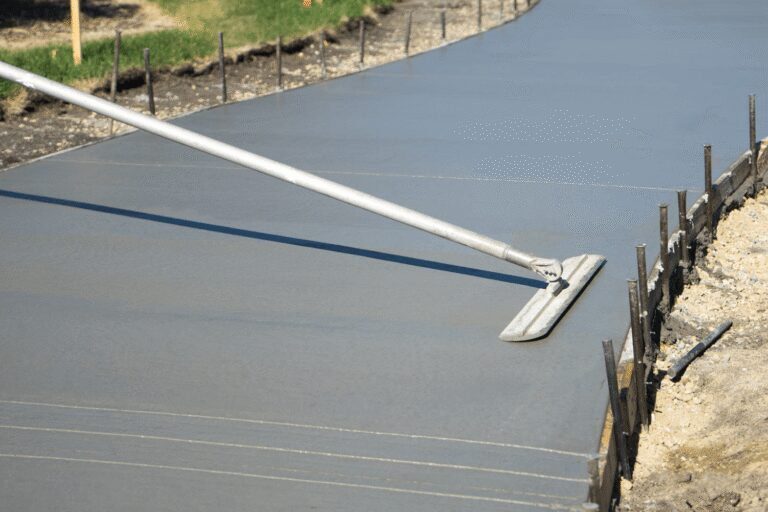
2. Power Trowels
-
Used for finishing and polishing.
-
Delivers smooth surfaces ready for coatings or sealants.
3. Concrete Mixers & Pumps
-
On-site batching plants or truck mixers maintain material consistency.
-
Pumps ensure faster placement in large-scale projects.
4. Vibrators (Needle & Surface)
-
Remove air pockets and improve compaction.
-
Critical for strength and durability.
5. Curing Systems
-
Water sprinklers, curing compounds, or wet coverings ensure hydration.
-
Prevents early cracking in hot Saudi climate.
Technical Specifications for Concrete Flooring in KSA
Concrete flooring systems must adhere to international standards (ASTM, BS, ACI) as well as Saudi SASO regulations. Typical specifications include:
-
Compressive Strength: 25–40 MPa depending on usage (factories vs. malls).
-
Flatness & Levelness: FF 50 / FL 35 for industrial slabs.
-
Thickness:
-
100–125 mm for commercial spaces.
-
150–200 mm for factories & warehouses.
-
-
Reinforcement: Mesh or rebar spacing at 200mm c/c for heavy-duty floors.
-
Curing Period: Minimum 7 days wet curing or equivalent with curing compounds.
Benefits of High-Quality Concrete Flooring in Saudi Arabia
-
Durability: Withstands heavy machinery and traffic.
-
Safety: Slip-resistant coatings improve workplace safety.
-
Cost-Effectiveness: Low maintenance reduces long-term expenses.
-
Aesthetics: Polished or epoxy-coated finishes enhance commercial appeal.
-
Sustainability: Compatible with green building practices under Saudi Vision 2030.
Case Studies in Saudi Arabia
-
DTC Factory Projects: Delivered high-strength concrete floors for industrial production facilities.
-
Retail Complexes: Used epoxy-coated concrete flooring for malls to balance durability with aesthetic appeal.
-
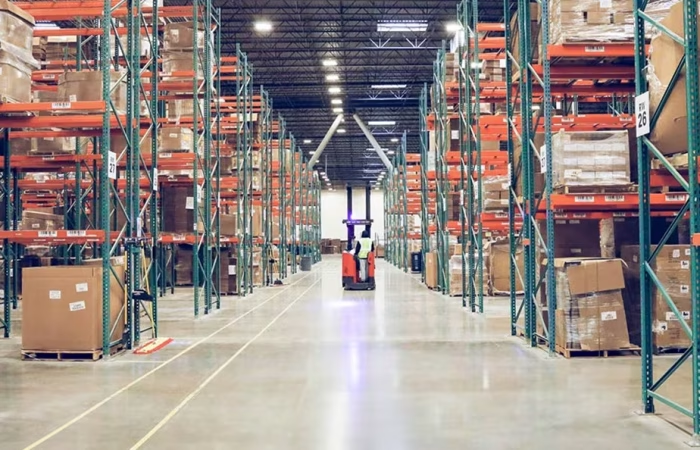
Warehouses: Applied laser screed technology for achieving large-scale flat surfaces ideal for logistics operations.