
Camp Accommodation Specifications and Best Design for 1,000 People in Desert Environments
Large workforce camps are essential for many industries operating in remote desert environments, such as construction, oil and gas, mining, infrastructure development, and industrial projects. When designing a camp for 1,000 residents, careful planning is required to ensure safety, comfort, operational efficiency, and compliance with international standards.
A well-planned camp is more than a group of sleeping rooms. It is a complete living ecosystem that includes accommodation, food services, healthcare, recreation, utilities, waste management, security, and transportation infrastructure. The design must consider the harsh desert environment, where temperatures can exceed 45°C, sandstorms are common, and water and energy resources require efficient management.
This article outlines the key specifications, planning considerations, and best practices for designing a modern desert accommodation camp for 1,000 residents, including both male and female occupants, senior staff, and junior workers.
1. Site Selection and Planning
The first step in building a desert camp is selecting the right site.
Key Considerations
Accessibility
The camp should be located close enough to the worksite to minimize travel time but far enough to avoid operational hazards. Typically, camps are located between 10 and 30 kilometers from major project areas.
Elevation and Drainage
Even in desert environments, flash floods can occur. The camp should be built on slightly elevated land with proper drainage channels.
Wind Direction
Buildings should be oriented to reduce exposure to strong desert winds and sandstorms. Wind barriers and landscaping can help reduce sand accumulation.
Land Area
For a 1,000-person camp, the recommended land area ranges between:
- 40,000 – 60,000 square meters
This allows space for accommodation blocks, dining halls, utilities, parking, recreation areas, and future expansion.
2. Camp Master Layout
A well-designed camp layout improves both safety and operational efficiency.
Recommended Zoning
The camp should be divided into the following zones:
- Accommodation zone
- Administration zone
- Dining and kitchen facilities
- Medical facilities
- Recreation and welfare areas
- Utility and service areas
- Security and entrance area
Male and Female Separation
Where female residents are included, separate accommodation blocks and dedicated facilities should be provided, including:
- Separate entrances
- Dedicated recreation areas
- Separate sanitation facilities
- Enhanced security
3. Accommodation Design
Accommodation buildings form the core of the camp.
Capacity Distribution
A 1,000-person camp may be divided as follows:
- 800 Junior workers
- 150 Supervisors
- 50 Senior staff / management
Each category requires different living standards.
4. Junior Worker Accommodation
Junior workers typically live in shared rooms designed to maximize space efficiency while maintaining acceptable comfort.
Room Specifications
Typical design includes:
- 4 persons per room
- Room size: 16 – 20 m²
- Individual beds
- Lockers
- Desk and chair
- Split air-conditioning
- Adequate lighting
- Smoke detectors
Block Layout
Each accommodation block may include:
- 20 rooms
- Shared toilets and showers
- Laundry room
- Small lounge area
Each block typically houses 80 residents.
5. Supervisor Accommodation
Supervisors usually require higher living standards.
Room Specifications
- 2 persons per room
- Room size: 18 – 22 m²
- Private bathroom
- Small refrigerator
- TV connection
- Work desk
Approximately 75 rooms would be required for 150 supervisors.
6. Senior Staff Accommodation
Senior staff and management typically receive private rooms or studio units.
Specifications
- Single occupancy
- Room size: 25 – 35 m²
- Private bathroom
- Small kitchenette
- Living area
- Work desk
- Internet access
- High-quality furniture
Around 50 rooms would be required.
7. Female Accommodation Area
Female staff should have a dedicated accommodation zone with controlled access.
Key Features
- Separate building
- Female security staff
- Separate dining area if required
- Private sanitation facilities
- Recreation lounge
Typical capacity:
50 – 100 residents
8. Dining and Kitchen Facilities
Food service is one of the most critical functions in a large camp.
Dining Hall Capacity
The dining hall should accommodate 40% of camp residents per meal cycle.
For 1,000 residents:
- Seating capacity: 400 people
Kitchen Facilities
The kitchen should include:
- Hot cooking area
- Cold preparation area
- Bakery
- Vegetable preparation
- Meat preparation
- Dishwashing area
- Dry food storage
- Cold rooms
- Freezer rooms
Food Storage
Recommended storage:
- Dry storage: 100 m²
- Cold storage: 60 m²
- Freezer: 40 m²
9. Medical Facilities
A camp clinic is essential for emergency response and routine healthcare.
Recommended Facilities
- Examination room
- Treatment room
- Isolation room
- Pharmacy
- Ambulance bay
Staff should include:
- One doctor
- Two nurses
- Paramedics
The clinic should operate 24/7.
10. Recreation and Welfare Facilities
Worker well-being improves productivity and morale.
Recreation Facilities
Recommended facilities include:
- Gym
- Football field
- Volleyball court
- TV lounges
- Internet café
- Prayer rooms
- Library or reading room
Outdoor shaded areas should also be provided.
11. Laundry Facilities
Laundry services are essential in large camps.
Recommended Capacity
For 1,000 residents:
- 20 washing machines
- 20 dryers
- Ironing stations
- Linen storage
Laundry services may be self-service or operated by staff.
12. Water Supply System
Water is one of the most critical resources in desert camps.
Consumption Estimate
Average daily water consumption per person:
150 – 200 liters
For 1,000 residents:
150,000 – 200,000 liters per day
Water Sources
Possible sources include:
- Tanker supply
- Desalination units
- Bore wells
- Municipal supply
Storage Tanks
Recommended storage capacity:
2 – 3 days reserve
Approximately:
400,000 – 600,000 liters
13. Power Supply Requirements
Reliable electricity is essential for desert camps.
Power Consumption
Average demand per resident:
2 – 3 kW
For a 1,000-person camp:
Total load: 2 – 3 MW
Power Generation Options
Common solutions include:
- Diesel generators
- Hybrid solar systems
- Grid connection (if available)
Backup System
The camp should have:
- N+1 generator redundancy
- Automatic transfer switches
- Emergency lighting
14. Cooling Systems
Cooling is critical in desert environments.
Air Conditioning
All buildings should be equipped with:
- Split AC units or
- Central HVAC systems
Typical cooling load:
120 – 150 watts per square meter
15. Wastewater and Sewage System
Wastewater must be treated properly to protect the environment.
Options
- Septic tanks
- Sewage treatment plant (STP)
For a 1,000-person camp, a 200 m³/day STP is recommended.
Treated water can be reused for:
- Landscaping
- Dust suppression
16. Solid Waste Management
Solid waste must be handled hygienically.
Waste Generation
Estimated waste generation:
0.8 – 1 kg per person per day
Total for camp:
800 – 1,000 kg daily
Waste Handling
Facilities should include:
- Waste sorting area
- Compactors
- Refrigerated waste storage
- Recycling systems
17. Fire Safety Systems
Fire safety is critical in densely populated camps.
Required Systems
- Fire alarm system
- Smoke detectors
- Fire extinguishers
- Fire hydrant network
- Emergency exits
All buildings should comply with international fire safety standards.
18. Security Systems
Security ensures the safety of residents and property.
Security Measures
- Controlled entrance gates
- CCTV surveillance
- Security patrols
- Access control systems
- Visitor management
Separate security arrangements should be provided for female accommodation zones.
19. Internet and Communication
Connectivity is essential for modern camps.
Communication Infrastructure
Facilities should include:
- High-speed internet
- Wi-Fi coverage
- Satellite backup connection
- Internal communication system
Workers rely on communication to stay connected with families.
20. Transportation and Parking
Transportation infrastructure supports daily operations.
Parking Facilities
The camp should provide parking for:
- Staff vehicles
- Buses
- Service trucks
- Emergency vehicles
Bus parking should allow easy movement during shift changes.
21. Environmental Protection
Sustainable design reduces environmental impact.
Sustainable Features
- Solar panels
- LED lighting
- Water recycling
- Energy-efficient buildings
- Insulated walls and roofs
These measures reduce operational costs and improve environmental performance.
22. Desert-Specific Design Considerations
Designing for the desert requires additional precautions.
Sand Protection
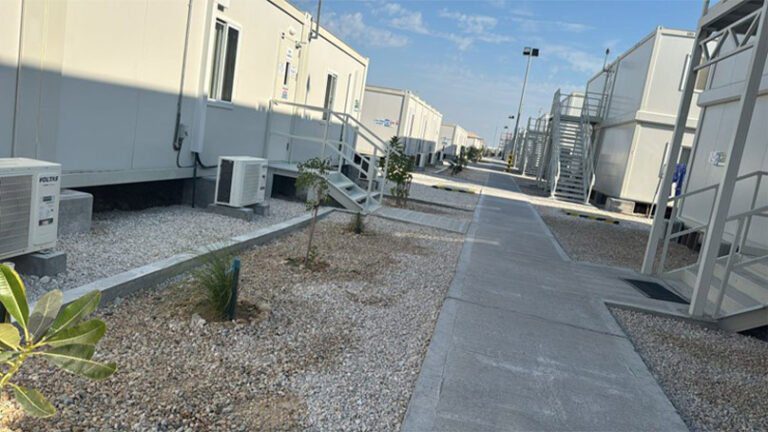
- Wind barriers
- Gravel landscaping
- Elevated foundations
Heat Protection
- Reflective roofing
- Insulated panels
- Shaded walkways
Dust Control
- Water spraying systems
- Asphalt or concrete roads
- Vegetation where possible
Designing a desert accommodation camp for 1,000 residents requires careful planning across multiple disciplines, including architecture, engineering, logistics, utilities, and environmental management. A successful camp design balances efficiency, safety, and comfort while ensuring reliable infrastructure in harsh desert conditions.
By implementing proper zoning, providing adequate accommodation standards for different staff categories, ensuring reliable power and water systems, and incorporating recreation and welfare facilities, project operators can create a safe and productive living environment.