TR34 Free Movement (FM) Floor Classification
Understanding Industrial Concrete Floor Tolerances for Modern Warehouses
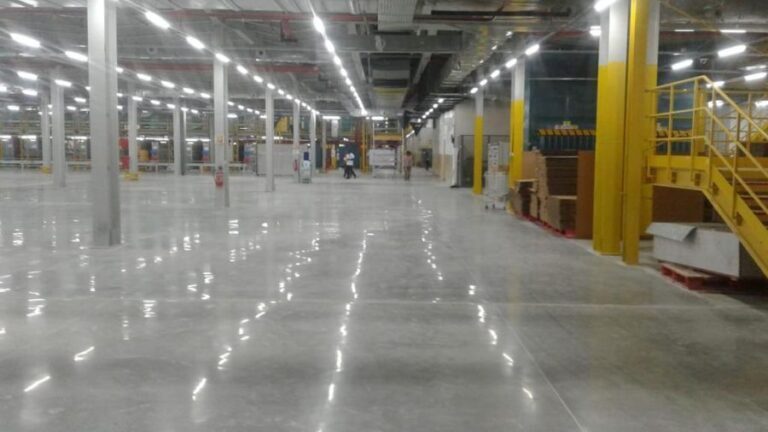
Industrial concrete floors play a critical role in supporting logistics operations, manufacturing facilities, and warehouse infrastructure. These floors must withstand heavy loads, continuous equipment movement, and long-term operational stresses.
In modern warehouses and industrial buildings, floor flatness and levelness directly affect operational efficiency and safety.
To ensure consistent performance, industrial flooring systems are often designed according to the TR34 concrete flooring standard, developed by the Concrete Society.
TR34 provides detailed guidance on the design, construction, and testing of concrete industrial ground floors. One of the most important aspects of this standard is the Free Movement (FM) floor classification system.
FM floor classifications define acceptable floor flatness tolerances for environments where material handling equipment moves freely across the floor rather than along fixed guide paths.
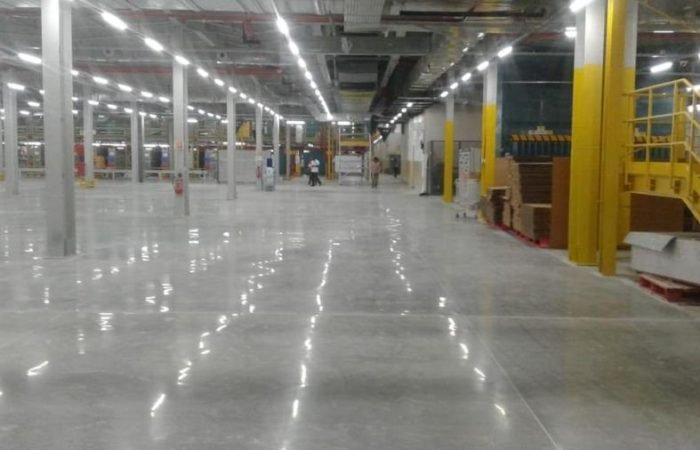
These flooring systems are widely used in logistics warehouses, distribution centers, manufacturing facilities, and storage buildings across regions such as Dammam, Riyadh, and Jeddah.
Industrial flooring contractors such as Dorrar Tammam Contracting (DTC) deliver concrete flooring systems designed to meet TR34 tolerance requirements for modern logistics operations.
What Is Free Movement Flooring?
Free Movement (FM) flooring refers to concrete floors designed for environments where forklifts and other material handling equipment move freely across the warehouse floor.
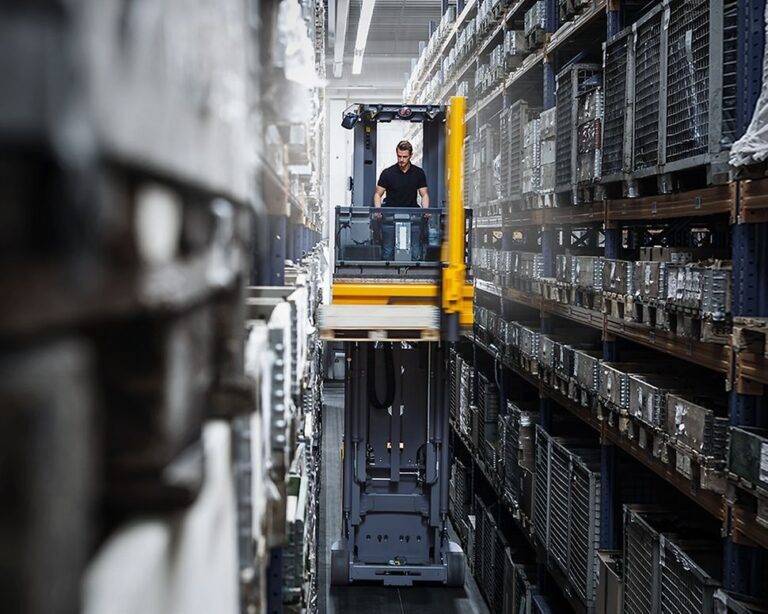
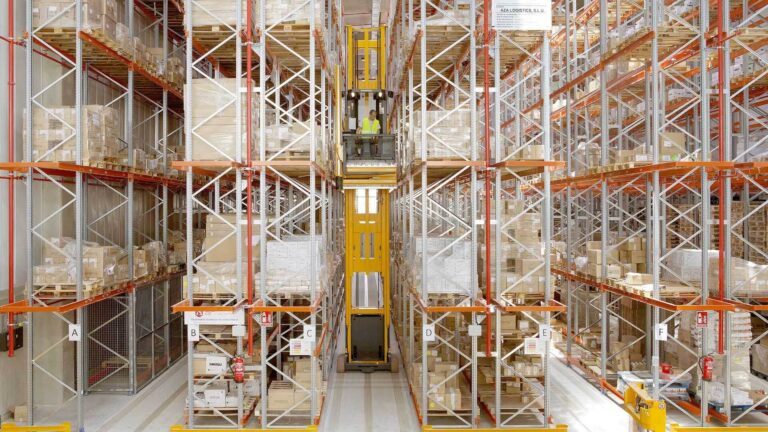
Unlike Defined Movement (DM) floors, which are designed specifically for VNA warehouse aisles, FM floors allow vehicles to move in multiple directions throughout the warehouse.
Free movement floors are typically used in:
-
conventional warehouses
-
distribution centers
-
manufacturing plants
-
retail storage facilities
These floors require consistent flatness across the entire floor surface.
Why Floor Flatness Is Important in Free Movement Warehouses
Floor flatness directly affects the performance and safety of material handling operations.
Uneven floors can cause several operational problems including:
-
forklift instability
-
pallet handling errors
-
equipment vibration
-
increased maintenance costs
Maintaining proper floor tolerances ensures smooth movement of forklifts and other warehouse equipment.
Overview of TR34 Free Movement Floor Classification
TR34 defines four primary free movement floor classifications.
These categories determine acceptable floor flatness tolerances based on the operational requirements of the facility.
The four classifications include:
-
FM1
-
FM2
-
FM3
-
FM4
Each classification corresponds to different tolerance levels.
FM1 Floor Classification
FM1 is the highest precision classification for free movement floors.
This category is typically used in warehouses requiring high levels of operational accuracy.
Characteristics of FM1 Floors
-
very tight flatness tolerances
-
suitable for high-lift forklifts
-
ideal for high-density warehouse storage
FM1 floors are often used in modern logistics centers with advanced material handling systems.
FM2 Floor Classification
FM2 floors provide slightly lower tolerance levels than FM1 but still maintain high precision.
These floors are suitable for warehouses with standard forklift operations.
Applications of FM2 Floors
-
general logistics warehouses
-
distribution centers
-
high-volume storage facilities
FM2 floors provide a good balance between performance and construction cost.
FM3 Floor Classification
FM3 floors are commonly used in industrial facilities where floor tolerance requirements are less strict.
Applications of FM3 Floors
-
manufacturing facilities
-
production plants
-
industrial workshops
These floors support heavy equipment while maintaining acceptable flatness.
FM4 Floor Classification
FM4 represents the lowest tolerance classification within the free movement system.
These floors are typically used in environments where floor flatness is less critical.
Applications of FM4 Floors
-
utility buildings
-
storage areas
-
industrial service facilities
Although tolerances are wider, floors must still meet structural and durability requirements.
Measurement Methods for FM Floor Tolerances
To ensure compliance with TR34 standards, floor tolerances must be measured using specialized equipment.
Straightedge Measurement
A straightedge is placed across the floor surface to measure deviations over short distances.
This method is commonly used during construction quality checks.
Floor Profilers
Digital floor profilers measure floor flatness and levelness across large areas.
These devices provide precise tolerance measurements.
Laser Measurement Systems
Laser-based systems are often used during concrete placement to control floor elevation.
These systems improve construction accuracy.
Construction Process for TR34 Free Movement Floors
Constructing FM-classified floors requires careful planning and quality control.
Subgrade Preparation
The base layer must be properly compacted to prevent floor settlement.
Activities include:
-
soil compaction
-
installation of base layers
-
moisture control
Reinforcement Installation
Reinforcement improves slab strength and reduces cracking.
Typical reinforcement systems include:
-
steel reinforcement mesh
-
fiber reinforcement
Concrete Placement
Concrete is placed using laser screed machines to achieve accurate leveling.
This technology helps maintain floor flatness.
Surface Finishing
Surface finishing methods include:
-
power troweling
-
polishing
-
surface hardeners
These finishing techniques improve durability and smoothness.
Quality Control Testing
After curing, floors are tested to verify compliance with TR34 tolerance requirements.
Testing ensures operational performance.
Challenges in Achieving TR34 Floor Tolerances
Constructing high-quality industrial floors involves several challenges.
Large Construction Areas
Warehouse floors may exceed 20,000–50,000 m², requiring consistent quality across large surfaces.
Concrete Shrinkage
Concrete shrinkage during curing may affect floor flatness.
Proper mix design and curing methods are essential.
Construction Accuracy
Small errors during finishing may lead to tolerance deviations.
Experienced contractors are required to maintain high precision.
Role of Professional Industrial Flooring Contractors
Achieving TR34-compliant floors requires specialized expertise and advanced construction techniques.
Professional flooring contractors ensure:
-
proper floor design
-
high-precision construction methods
-
strict quality control procedures
Industrial flooring companies such as Dorrar Tammam Contracting deliver flooring systems designed to meet the operational requirements of modern logistics and industrial facilities.
Future of Industrial Flooring Technology
Warehouse and industrial operations are increasingly adopting automated systems including:
-
automated guided vehicles (AGVs)
-
robotic pallet handling systems
-
automated storage and retrieval systems (ASRS)
These technologies require high-quality flooring systems with consistent flatness.
TR34 standards will continue playing an important role in supporting modern warehouse infrastructure.
Understanding TR34 Free Movement Floor Classification
TR34 Free Movement floor classifications provide a standardized framework for designing and constructing industrial concrete floors.
These classifications help warehouse developers choose appropriate floor tolerances based on operational requirements.
By implementing TR34-compliant flooring systems, developers can ensure:
-
safe forklift operations
-
improved logistics efficiency
-
reduced maintenance costs
-
long-term flooring durability
High-quality industrial flooring is therefore a critical component of modern warehouse and manufacturing infrastructure.